
The World Is Your Oyster in Tony (2026)
Staff Writer Foo Yan Ning explores the coming-of-age narrative of Matt Johnson’s Tony, examining how the film captures Bourdain’s journey from pretender to chef.
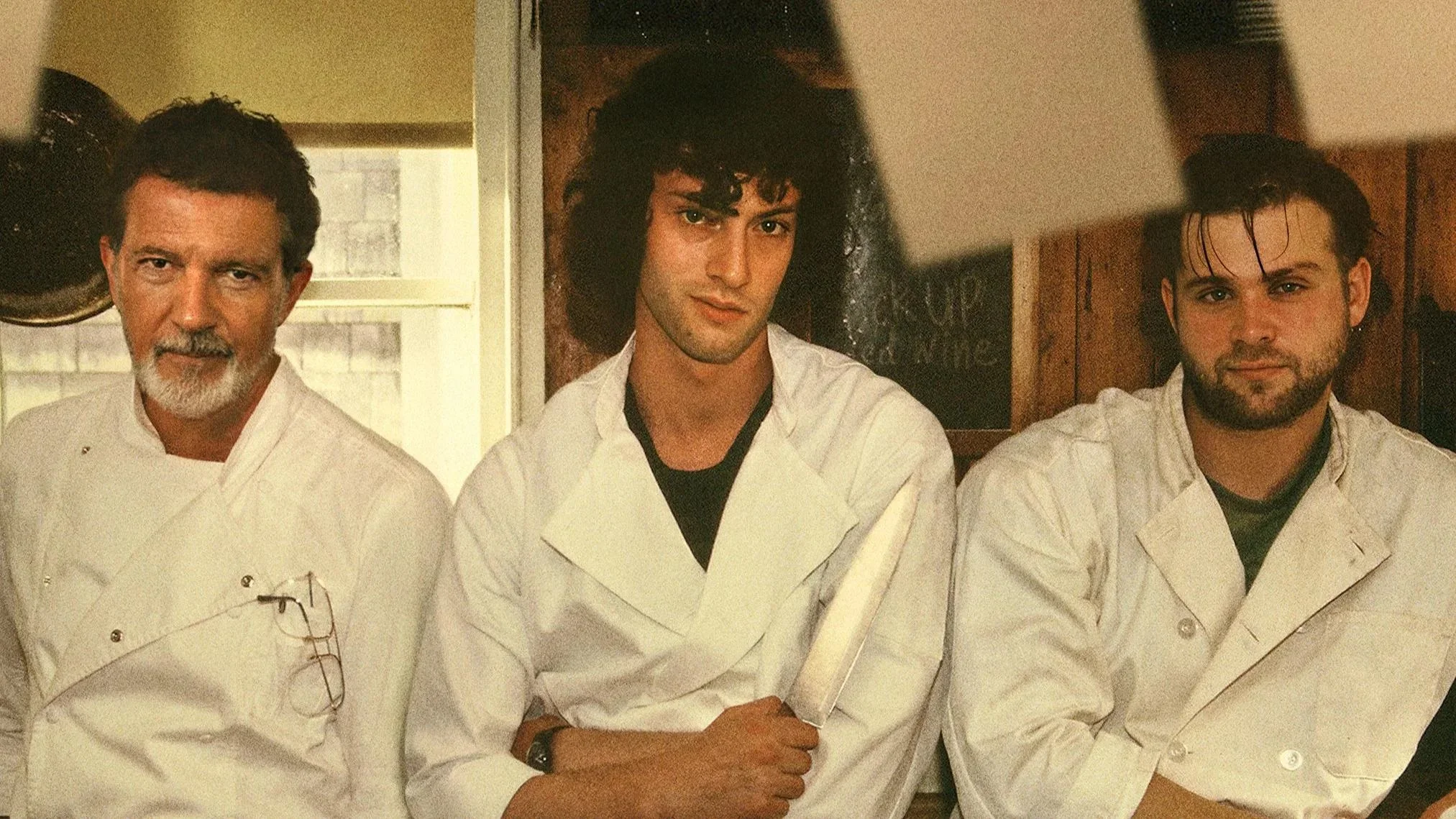
Image taken from Harper’s Bazaar
“It tasted of seawater . . . of brine and flesh . . . and, somehow . . . the future," A raw oyster on a sandy creek. That was all it took for Anthony Bourdain to fall into the alluring world of food. Bourdain, who passed away in 2018, was one of America’s most celebrated chefs. An influential figure, he used food as a medium to discuss politics and social issues. But before enrolling at the Culinary Institute of America, Bourdain was nowhere near pursuing a career in the kitchen. Instead, he wanted to be a writer and that is where we find ourselves at the beginning of Matt Johnson’s Tony (2026). It is a coming-of-age biopic that explores how an angsty yet eloquent 19-year-old Bourdain reshapes the trajectory of his life through the chaos of a kitchen.
In the film, young Bourdain lies about getting into a writing fellowship and chases the girl of his dreams to Provincetown, a vibrant coastal town located at the very tip of Cape Cod. With no money to his name, he finds himself a dishwasher at a small restaurant with brash cooks. They eventually become his models and mentors, both in the kitchen and in life. The warm tones of the film’s colour grading and the use of nostalgic tracks like Magic Mountain by Eric Burdon and Old Cape Cod by Patti Page not only build the atmospheric scene of the ‘70s, but also help to take the focus off Bourdain's eventual legacy, stripping the film down to an emotional journey of discovering life’s purpose. In Tony, Bourdain is not yet the man the world adores, but rather, just another teenager trying to find his place in the great unknowns of the future.
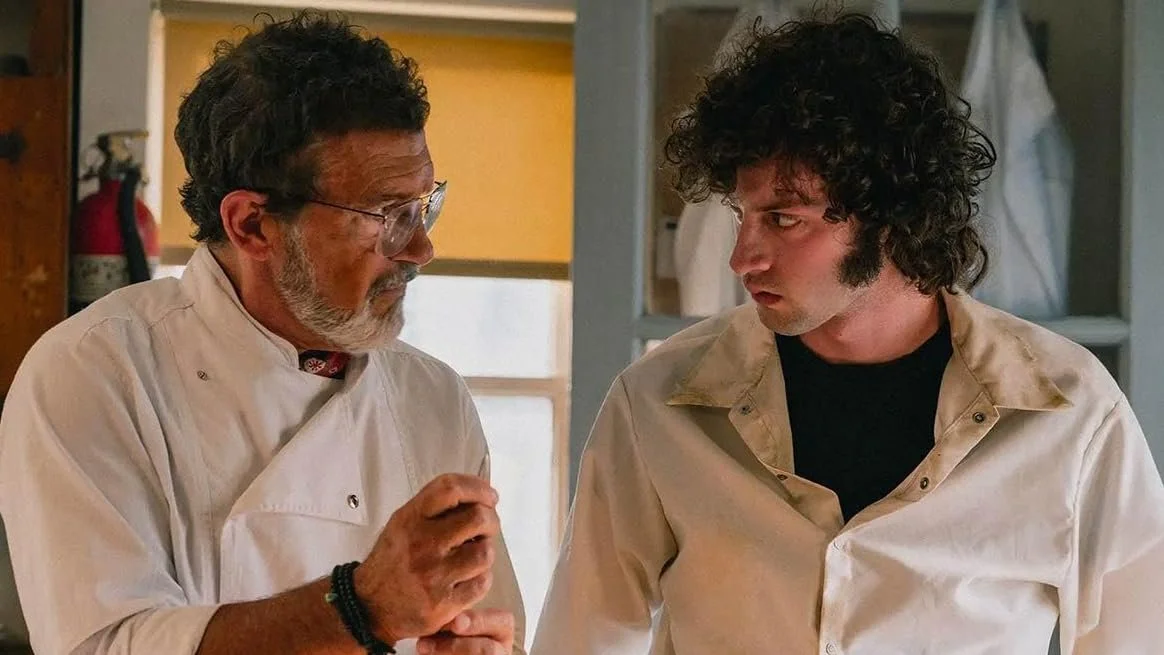
Image taken from IMDB
Throughout the film, Bourdain is presented in a rather unlikable manner. He comes off cocky, often placing himself on a pedestal. He even goes by Tony instead of Anthony to seem more mysterious. This is ironic, because Bourdain does not seem to have a sense of self. He unconsciously mirrors the behaviours of the people he admires, and lies compulsively about who he really is. Bourdain attempts to construct several identities for himself, but this is impossible to keep up with. But at the same time, this lack of identity is innately poetic — as though Bourdain is a blank sheet of paper picking up a palette of colours from those around him. He subconsciously adopts the habits of the people he admires, and becomes a mosaic of everyone he has ever loved. By living with Chef, working in the rugged kitchen and experiencing life in a way he never has, Bourdain’s massive ego starts to shrink. He becomes more in touch with the beauty of fresh ingredients, punctuality, faith and the joy of a simple life.
One of the most beautiful scenes of the film, for me, is when Chef spontaneously brings Bourdain out tuna fishing in the wee hours of the morning with other folk in town. Bourdain is awe-struck by the camaraderie of the locals during the fishing trip, as they catch massive tuna to share for a meal. This moment also connects him to the rawness of where food actually comes from, and he is delighted by the freshness of simple, pure tuna. It is perhaps the first time Bourdain genuinely smiles in the film. Feeding off Chef’s life philosophies, Bourdain also influences Chef for the better. Chef had become so caught up with running the restaurant, it seemed he almost forgot the pure joy of cooking in itself. But when Bourdain convinces him to put lobster thermidor on the restaurant’s humble menu, this reignites Chef’s love of the art of cooking. Bourdain reminded him why he wanted to be a chef in the first place.
But of course, Bourdain starts to see the imminent collapse of his pretences when he spends his life trying to be someone he is not. His lies cause immense hurt and damage to the people he loves, highlighting the fragility of his false sense of self. But perhaps it is only because of this breaking point that Bourdain is able to pick up the pieces and reconstruct himself, this time on the beliefs he truly values. When stuck at a crossroads between following Sal, or staying behind to help Chef, Bourdain leans to where his heart lies – the person who taught him how to love food in its purest form.
It is all the more symbolic that it was Chef who introduced Bourdain to the idea of clambake after their fishing session. That moment marks Bourdain's first glimpse of food as something larger than taste or ambition. When he eventually hosts a clambake on the beach for the people in town, he finally understands what food can mean to a community. In the end, he sees that fulfilment isn’t grounded on cooking the most complicated and fanciful dishes; it’s often found through the simplest meal imaginable. A direct reflection of Bourdain’s journey of finding his sense of self, he also comes to see that identity isn’t built on the pretences we claim ourselves to be, but really lies in what speaks to our souls.
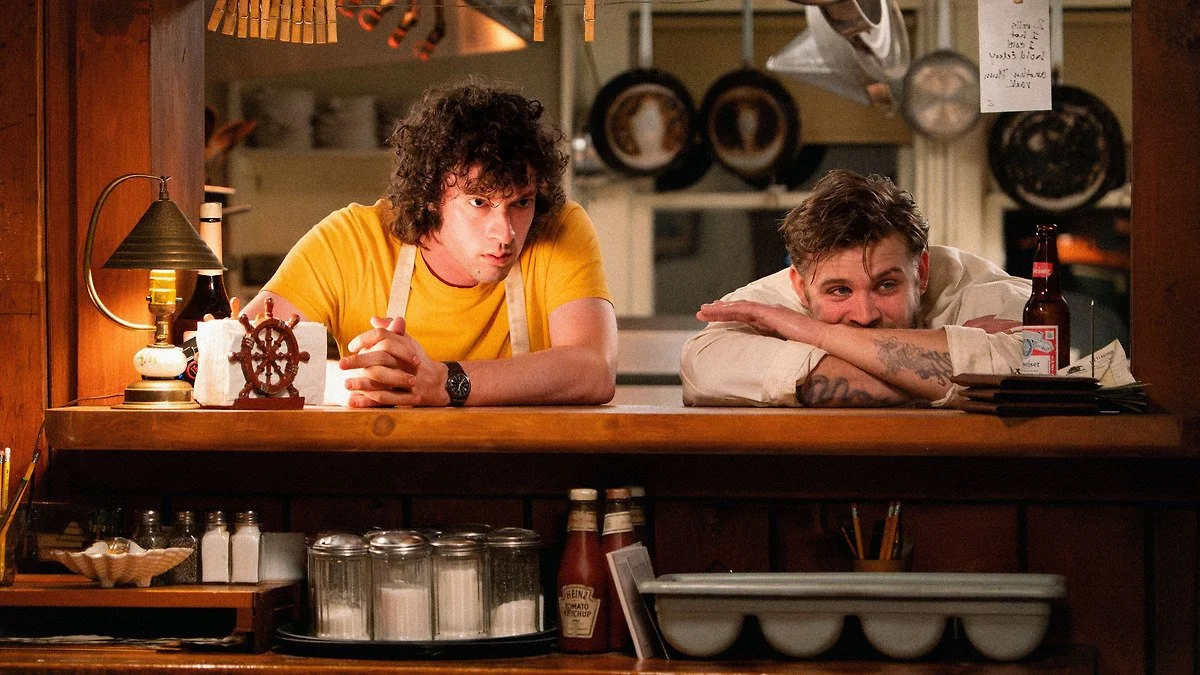
Image taken from Hollywood Reporter
And so, in collecting all these mannerisms and habits from the people he admires, Bourdain eventually learns to reject what misaligns with him, and grows into the person he truly is. At the end of the film, Bourdain is ready to leave behind his old constructed persona, and embraces his true identity, finally donning his full name – Anthony Bourdain.
For me, Tony embodies a deep sense of hope – hope that everything happens for a reason. Though Bourdain may have picked up negative influences from people like Sal that have led him astray, it is also through such experiences that he is shaped into the person he is. And it is only through meeting a mentor like Chef that Bourdain also discovers where his real passion lies. Meeting both Sal and Chef were equally important in Bourdain’s journey to uncovering his authentic self. Indeed, Tony shows us that the journey of self discovery is a painful but fruitful one. It is only when we stop subjecting ourselves to false personas, and instead learn to embrace our real identities, that the world becomes our oyster.
Images in this article are being used under Fair Use guidelines as part of Singapore's Copyright Act 2021.