
The Bloodstained Innocence of Chainsaw Man – The Movie: Reze Arc (2025)
Staff Writer Agastya Polapragada dwells on what makes Chainsaw Man - The Movie: Reze Arc one of the most impactful animated films released in the last year.
This review contains spoilers
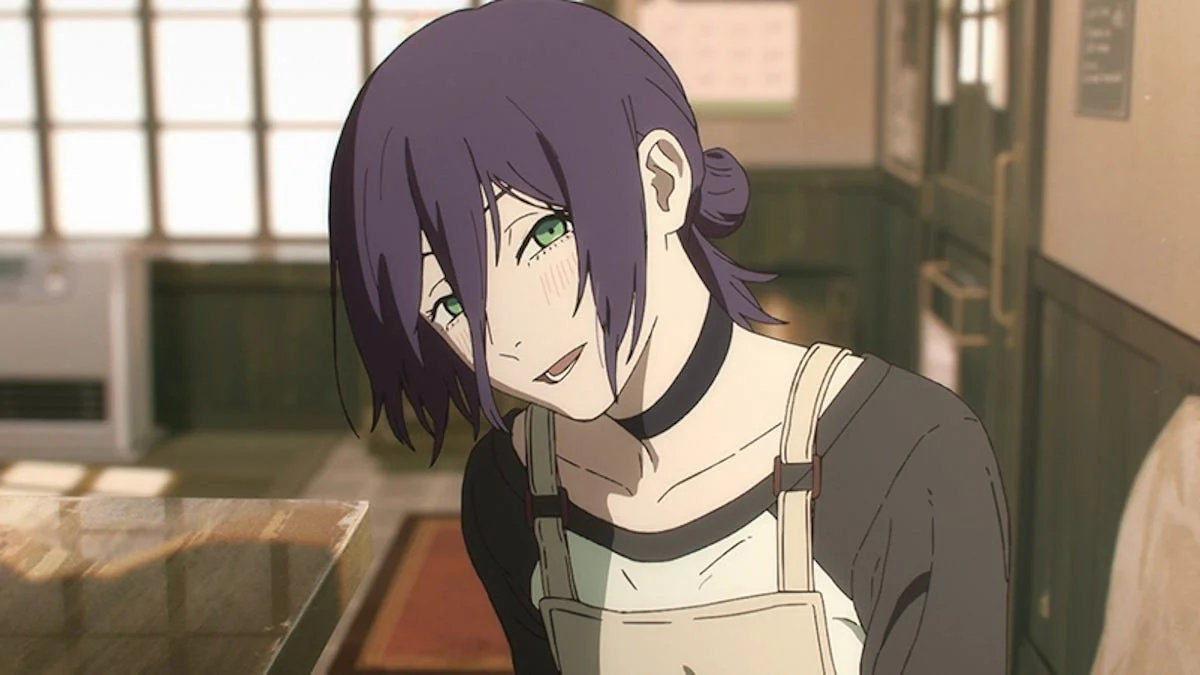
Image taken from Medium
Chainsaw Man is a story about a young teenager named Denji who has absorbed the heart of a chainsaw devil and is trying to live out his perfect life. He works as a devil hunter for Division 4 of the Public Safety branch, where his job is to protect the world by exterminating devils. The Reze Arc movie (Tatsuya Yoshira, 2025) is an interquel movie between seasons one and two of the anime adaptation, which introduces the character Reze, who becomes a love interest for Denji.
From the very first episode of the show, Denji expresses that he wants nothing more than to eat good food and to be with a woman he loves, outside of which he has no aspirations. Having grown up destitute and under the control of a mob boss - and having recently absorbed a devil's heart – has made him impulsive and indifferent to the world around him. Moreover, being forced to follow orders since his childhood has trained him to keep his head down and just survive, leaving him unable to discern people’s intentions or manipulation. This tumultuous upbringing of his has hindered Denji’s natural development and has suppressed his desires for love and normality, rendering him unable to navigate them. This theme is the soul of the story and his character, and is the first thing the film tackles.
Makima, Denji’s boss and the woman he has been infatuated with for a while, asks him out on a date. Makima has a sweet and subdued disposition, but each scene with her carries an unnerving undertone. Viewers can detect that her decisions are highly calculated and that she will manipulate anyone to achieve her mysterious grand plan. This is what she has been doing to Denji for a while, weaponising her role as his boss and his desires for intimacy and sex to wield power over him. While her attempts to induce his infatuation and loyalty are transparent to us, he is too doe-eyed and unassuming to make anything of them.
One of the best aspects of this film is that, despite being an action movie, it is largely composed of quiet, contemplative sequences and tender moments. The first sequence, which documents Makima’s date with Denji, is just scenes of her leading them to different movie theatres. They stroll around here and there, watching movies they find mostly boring or corny, until they finally bond over the last movie they watch and how both of them found it emotional and sad. After discovering a sense of kinship and connection to her, Denji decides to “save his heart for Makima”. But this supposedly budding ‘romance’ is brought to a halt when Denji has an amusing encounter with Reze.

Image taken from The Statesman
For a good chunk of screen time, Reze’s character seems to fall under the ‘Manic Pixie Dream Girl’ trope. She laughs at all his jokes, shows immediate romantic interest in him, is unceasingly happy and nothing but nice to him. She does, however, seem genuinely curious about who he is, as a person. His idiosyncrasies and his childhood pique her interest. Their growing romance culminates in one of the film’s sweetest scenes, where Reze teaches Denji how to swim. The animation is awe-inducing, and the score “in the pool” by Kensuke Ushio is so full of life and passion, perfectly conveying the tenderness of the scene. This scene is poignant because it gives Denji a glimpse into what pure, unconditional love looks like for the first time; it’s an act as simple as Reze “teaching him how to swim”. He knows a little bit more about life outside of its barest circumstances and is a slightly more complete person for it. For this experience, Reze expects nothing in return from him. After all, that’s how people who truly love you treat you. Sadly, the joy of this scene is short-lived, as it is soon revealed that Reze is actually a devil who is after Denji’s heart, which happens to be the mysterious objective of most villains going after him.
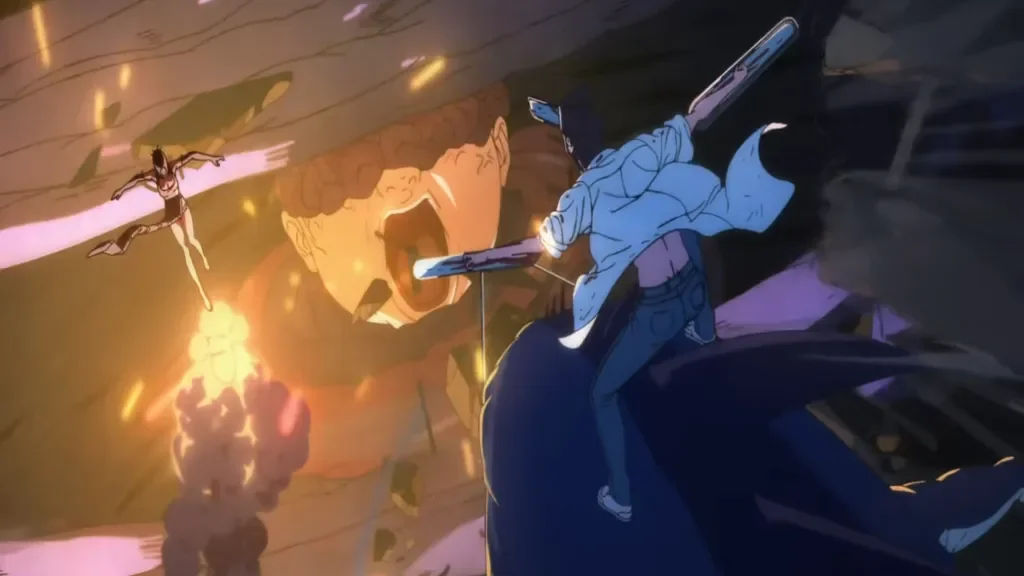
Image taken from ComicBook.com
Remember when I said this was supposed to be an action movie? It most definitely is, because the aftermath of this reveal builds up to one of the most chaotic and borderline insane action sequences of 2025. The dynamic chase sequence begins after Reze reveals herself as the bomb devil. As she flicks explosion after explosion at an unconscious Denji and his allies, the audience is treated to a spectacle of colours, with flames, rubble and limbs flying across the screen. This culminates in a riveting climax, where Denji transforms his limbs and head into chainsaws, rides a shark around a tornado, and goes blow-for-blow with Reze. Nothing makes for a more thrilling viewing experience than a film that is not afraid to be excessive and is unabashedly itself. There is also much to appreciate about how a good fight sequence showcases the main character’s resilience, where they give until there is nothing left to give, just to barely win the battle. This is also how the fight comes to an end, with Denji outsmarting Reze.
After capturing her, Denji, surprisingly, lets her go. He confesses that he would feel guilty if he turned her in, and when she tells him off and says she was only acting, he persists in professing his feelings. He acts sheepishly, kind of like a child who does not understand the gravity of the situation. All of the lives lost, the risk of letting Reze go, is subdued by that old suppressed desire Denji has to have a genuine connection to another person. Earlier in the film, Reze offered Denji the chance to stop surviving and run away with her and discover the full extent of being alive. He refused at first, but now, as he ponders turning her in, he decides that fulfilling a relationship is worth chasing. The world of Chainsaw Man is one where Devils spawn from people's worries and strife; when people grow scared of guns, a gun devil forms. This supplies the show with a way to present its characters in a constant battle with their own demons and trauma. With this as the backdrop of the story, it evokes strange feelings to see a character ignore or shake off the things they should be tortured by. Even though you know it’s not necessarily healthy, it’s kind of refreshing. To Denji, the world's troubles and stresses do not seem like tall mountains to be climbed and overcome the way they do to us. Instead, they are just momentarily hurdles whose passing is more of a source of joy than relief.
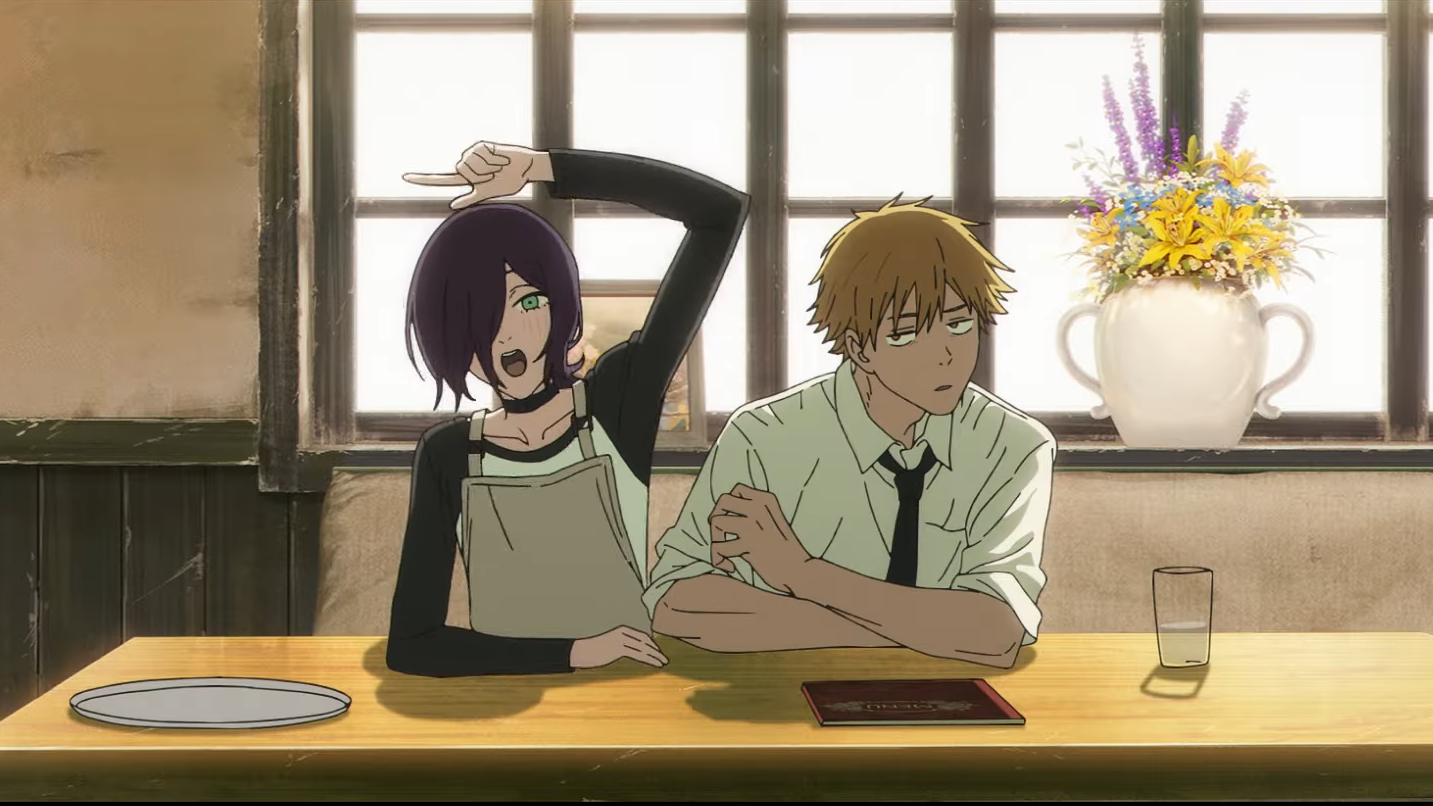
Image taken from Anime Trending
It is later revealed that Reze was experimented on as a child and kept trapped by the Soviet Union, until she was released as a weapon to hunt Denji. At the very end of the movie, there is a single line of dialogue from her, which gives the audience a deeper insight into her character. She says, “I wonder why I didn’t kill you the first time we met. Denji… to be honest, I didn’t go to school either.” Reze seems to be very different from Denji on the surface; she seems more perceptive than him, and the way she behaved as the bomb devil was cruel, but the nature of their circumstances and upbringing is similar. She, too, has an eat-hunt-sleep mentality that has buried any thoughts of a more fulfilling life deep within her. In the end, her final attempt to realise a better life for herself was not allowed to come to pass, leaving us with the hope that the same fate does not find Denji.
A recurring theme in Chainsaw Man seems to be the exploration of whether life is worth living. Something I find very interesting about the movie is that when I reflect on the scenes from earlier, especially the ones that carry a more romantic undertone, they do not seem sad or twisted in retrospect. The dark events that happened afterwards only make the fact that a real relationship could form between them seem more magnificent than we initially thought. It is as though the filmmakers wanted to ignite a sense of urgency in people to chase and appreciate experiences that really fill their hearts and minds; to enjoy life despite its relentless struggle.