
Staff Writer Kyle Ashley Pillai muses about Bi Gan’s unique spin of poetry, dreams and cinema in his debut feature Kaili Blues (2015).
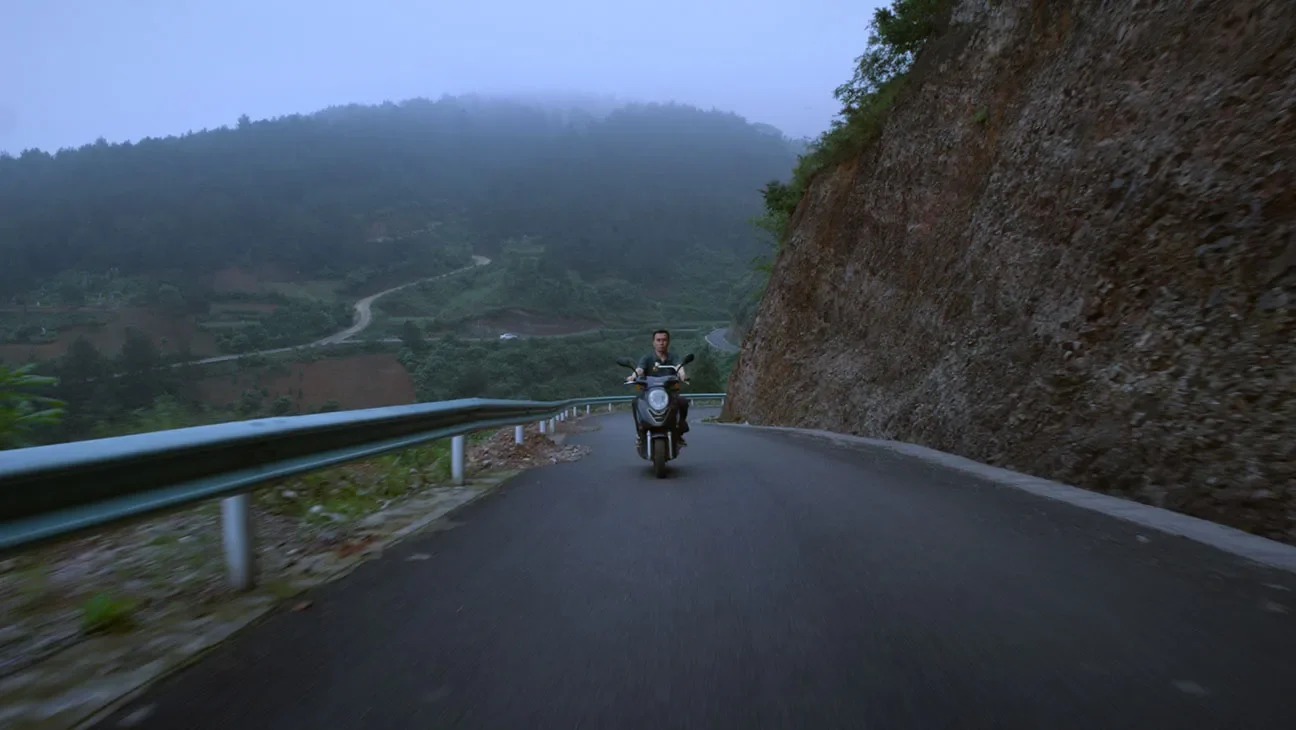
Image taken from The Hollywood Reporter
Dreams are strange.
That is the best way to describe Bi Gan’s cinematic concerns. From Resurrection’s central idea of humans forgetting to dream, to Long Day’s Journey Into Night dreams of unrealised potential, Bi Gan’s cinema is oneiric, and dreams play a pivotal role in the worlds he crafts. The Chinese auteur is rarely invested in the mechanics of plot, with his films often revolving around dreamlike states and playing with time. Their meditative qualities transcend the boundaries of reality, letting the subconscious play out in a contemplative fashion, where the real meets the surreal.
Such qualities have existed since his debut feature Kaili Blues, a low budget film following Chen Sheng, an ex-convict turned rural country doctor in the misty, subtropical town of Kaili. He holds a close bond with his nephew, Weiwei, whom his half brother — nicknamed ‘Crazy Face’ — often mistreats. When Crazy Face abandons Weiwei by sending him to live with his old mentor Monk in Zhenyuan, Chen Sheng goes on a journey to find Weiwei and bring him home. Or at least, that’s the plot.
Kaili Blues is heavily inspired by the works of Andrei Tarkovsky, particularly Stalker. Those familiar with the film will know the protagonist enters an area known as ‘The Zone’, where one’s innermost desires can be realised, a space where normal logic and time break down. Similarly, while on a train ride to Zhenyuan, Chen Sheng falls asleep, and the film drifts into the fictional city of Dangmai, which translates from Miao language to refer to ‘a place that does not exist’.
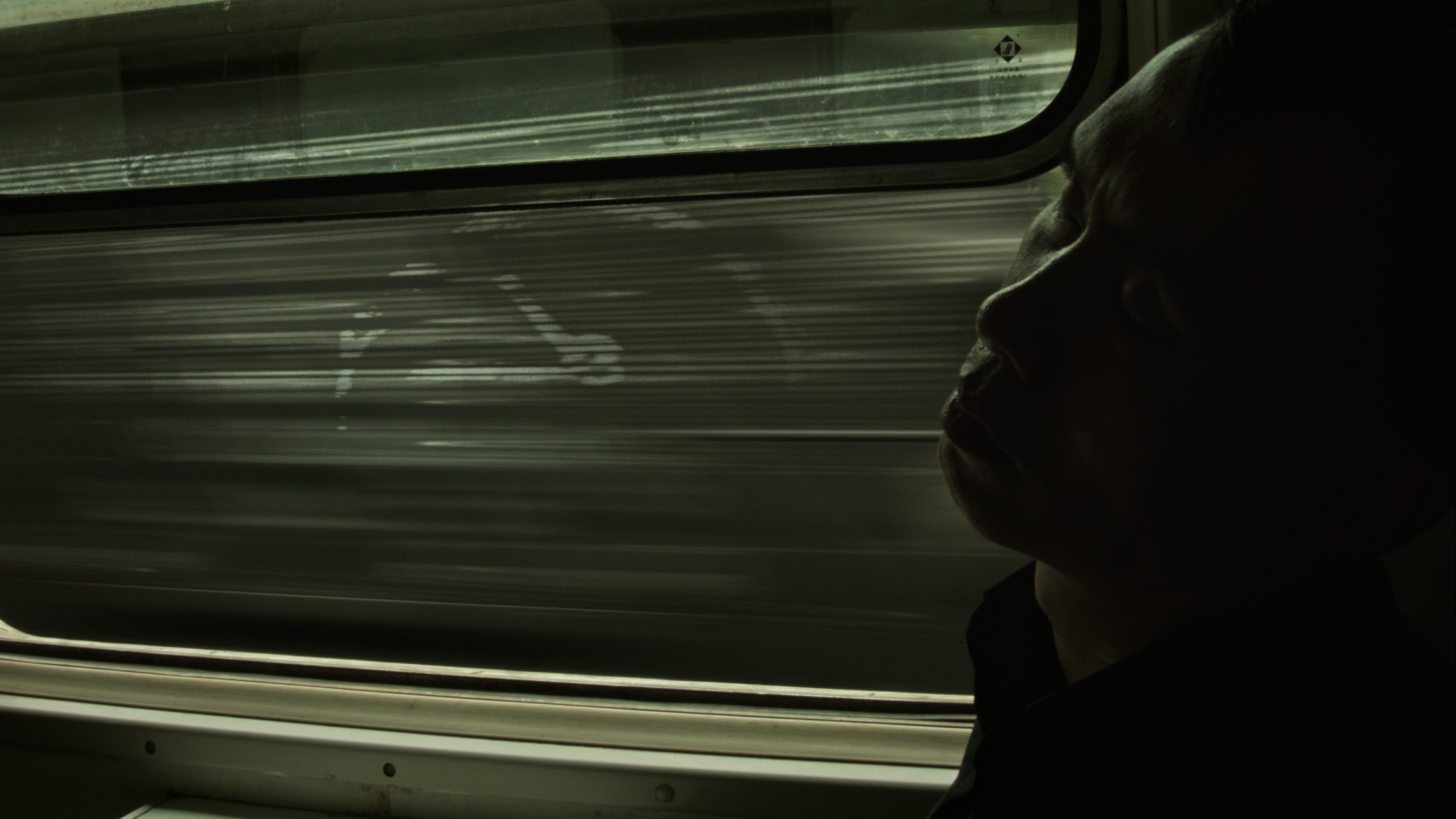
Image taken from Cineaste Magazine
Both Bi Gan and Tarkovsky employ similar sensibilities, particularly the use of poetic cinema. Chen Sheng has a poetry collection called Roadside Picnic, once again, a reference to Tarkovsky’s Stalker. Rather than utilising traditional narrative storytelling, lyrical poetry becomes an extradiegetic space to blur the boundaries between past and present, transcending the film into a natural, magical realism. The film is obsessed with poetic imagery as a form of emotion and pathos, with cinematic truth taking precedence over realism. This ‘free flow’ narrative style emphasises the subjective nature of time and temporality, drifting between reality, grief, and memory. It captures the transience of emotion and experience, and in Kaili Blues, it is often paired alongside automobiles drifting through hazy roads and forests. The roads are endless and dreamy, the environment becoming a surrounding force of the characters and capturing their emotional states. It’s a distinct expressive format akin to recollecting memories.
The automobile, the theme for this year’s Perspective Film Festival, is a striking motif in Kaili Blues. Through motorcycles and trains, it becomes a metaphor for drifting aimlessly through transience, through conscious and subconscious, acting as a temporal vehicle that transports between realities, drifting to nowhere. The vehicle almost stops being a means of getting somewhere and becomes the point. Kaili Blues offers the idea that sometimes the road doesn’t lead to a destination at all. It simply drifts, and Bi Gan invites us to drift with it. It’s an idea reiterated throughout the film, beginning with the Diamond Sutra quote overlayed at the beginning of the film.
“It is impossible to retain a past thought, to seize a future thought, or even to hold on to a present thought.” — Diamond Sutra
The esoteric continues in the second half, where Bi Gan’s trademarks come into play. A 41 minute long tracking oner makes up the climactic second-half of the film where the past, present and future intertwine in Dangmai, linking the temporal to regret and longing. While it initially follows Chen Sheng travelling through Dangmai trying to get to Zheyuan, the camera drifts through other characters in their daily lives as well. Rivers, music, boats, poetry all imbued with a sense of magical realism in this long, hypnotic take.
Bi Gan’s use of the camera in the film is intriguing as well. Rarely does the camera track alongside or follow a singular main character in the frame. The camera often takes its own path, panning away from the characters, or pulling in towards a different character in the same scene. The camera almost becomes a person in itself drifting through the dreamscapes, ultimately defying a singular subjective perspective for an elusive experience.
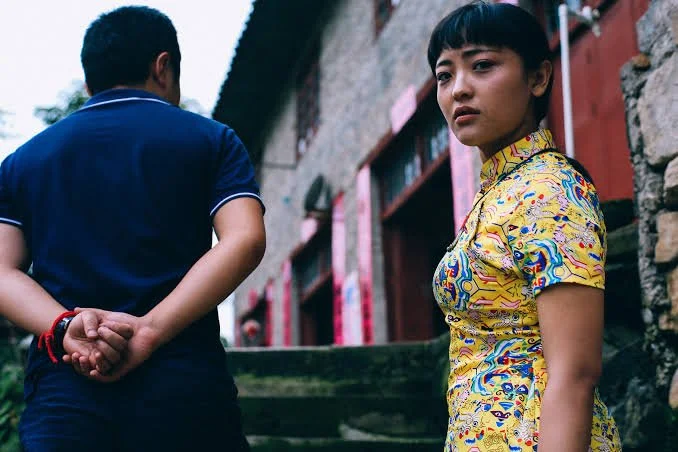
Image taken from IndieWire
It’s worth noting how Bi Gan’s fixations are on the provincial, rural landscapes of China. The 36 year old director hails from Guizhou, and the film captures these landscapes with a tactile imagery of the riversides, with damp, run-down textures providing a lived-in intimacy. The roads are winding and muddy, becoming part of the film’s dream logic, where the geography of the space blurs into the memories of the people who live in it, becoming as transient as the thoughts the Diamond Sutra warns us not to hold on to.
With Kaili Blues, Bi Gan opens the door to a new realm of cinematic possibilities, and thematic concerns which he builds upon in his later features. Kaili Blues is a hypnotic work, drifting through the fog, searching for something in the transient.
IMAGES IN THIS ARTICLE ARE BEING USED UNDER THE FAIR USE GUIDELINES AS PART OF SINGAPORE'S COPYRIGHT ACT 2021