
Kpop Demon Hunters: When Did K-pop Become Cool?
Staff Writer Wong Dao En reflects on his own personal history with the K-pop genre and discusses how the success of Kpop Demon Hunters (2025) help to redeem the once-hated musical genre.
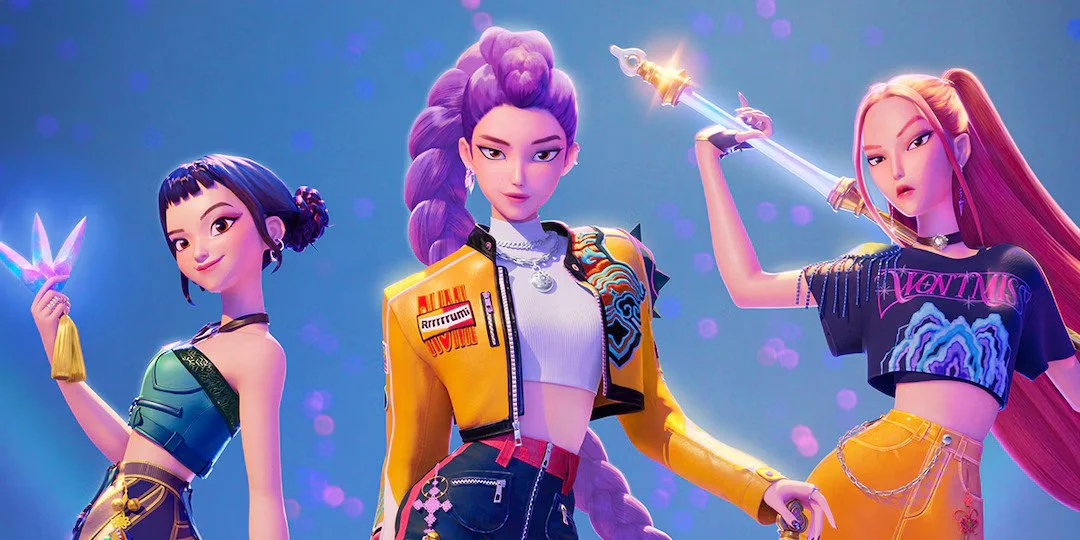
Image taken from E!News
Last year, it seemed impossible to avoid any mention of Netflix’s KPop Demon Hunters. You’d be walking around your neighbourhood mall, and you’d hear Huntrix or Saja Boys blasting from the speakers of Miniso, Harvey Norman, or even FairPrice. with every “It’s going up, up, up, it’s our moment”, you’d either sing along to it, or loathe it so much questioning why this derivative record has resonated with so many around the world. Regardless of how you felt about it though its cultural impact seems impossible to discount. Its success appears to point towards a newfound acceptance in the West for other cultures to also permeate mainstream consciousness.
KPop Demon Hunters – in spite of its categorisation as a childish movie with “brainrot” songs – may have arguably done the K-pop industry wonders with its redeeming image of the genre. This is especially conveyed through the film’s heroic portrayal of the film’s main trio: Rumi, Mira, and Zoey, who are K-pop idols moonlighting as demon hunters as part of their quest to “seal the Honmoon” – a dome-like layer in the stratosphere which prevent demons from infiltrating human society. By portraying the heroic protagonists as badass and cool, the film glamourises the profession and humanises these popstars in this refreshingly positive light – but just how much does this actually reflect the lived experiences of K-pop idols?
Meanwhile, the K-pop industry has not been known to be the most “positive”. In fact, it is quite the opposite: strict, manufactured, and at times toxic. In contrast, the film portrays the protagonists to have creative liberty, unrestricted access to food, and best of all – they even have enough free time to moonlight as demon hunters! It is wild to see K-pop get such positive PR, and to think that an animated film exploring the genre would wind up winning an Oscar would have felt unthinkable before.
But of course, malpractice isn’t the only negative public relations that has plagued the industry for years. Around the time when the second generation was active, with the likes of BigBang and Girls’ Generation, I knew many people who refused to take the music genre seriously. This included primary-school me, whose naive exposure to popular media made me scorn the weird, cringey songs that made no sense, while thinking that the male idols were emasculated through their ridiculous make-up, hairstyling, and fashion. As a 10-year-old, I obviously did not know what internalised misogyny was, and societal expectations made me feel inclined to dismiss those K-pop songs for being “gay” and cringe.

Image from Billboard
It was only after one of my first secondary school friends, a Got7 stan, told me to give their song “If You Do” a listen where my skepticism and negative bias for the genre was wrong. “If You Do” was a somewhat mid-tempo song that challenged what I thought the genre was: quirky, loud electropop or bubblegum-pop songs with nonsensical English lyrics and an abundance of aegyo. When I realised that this was an industry with a wide range of musical styles instead, I started to fall down the rabbit hole and my appreciation for it grew.
Slowly as the years went by, I noticed that the genre started seeping more into the mainstream, and I noticed my heterosexual male classmates – the ones I didn’t expect to like this genre – open up about their love for K-pop. Part of me was bitter that it was now acceptable for straight men to openly put Sana as their Instagram profile photo, as my gay, Taylor Swift-liking self was incessantly bullied for liking what people thought were songs made for teenage girls.
However, I decided to view it as a good thing. It meant that K-pop was now cool, and we had now fostered an environment where people were able to feel safe openly stanning what was once an “uncool” music genre. Before I knew it, I was in an all-male environment in the depths of Tekong, and I was hearing my platoon mates singing along to “Cupid” by Fifty Fifty as it came on the radio in the cookhouse. How the hell did this happen?
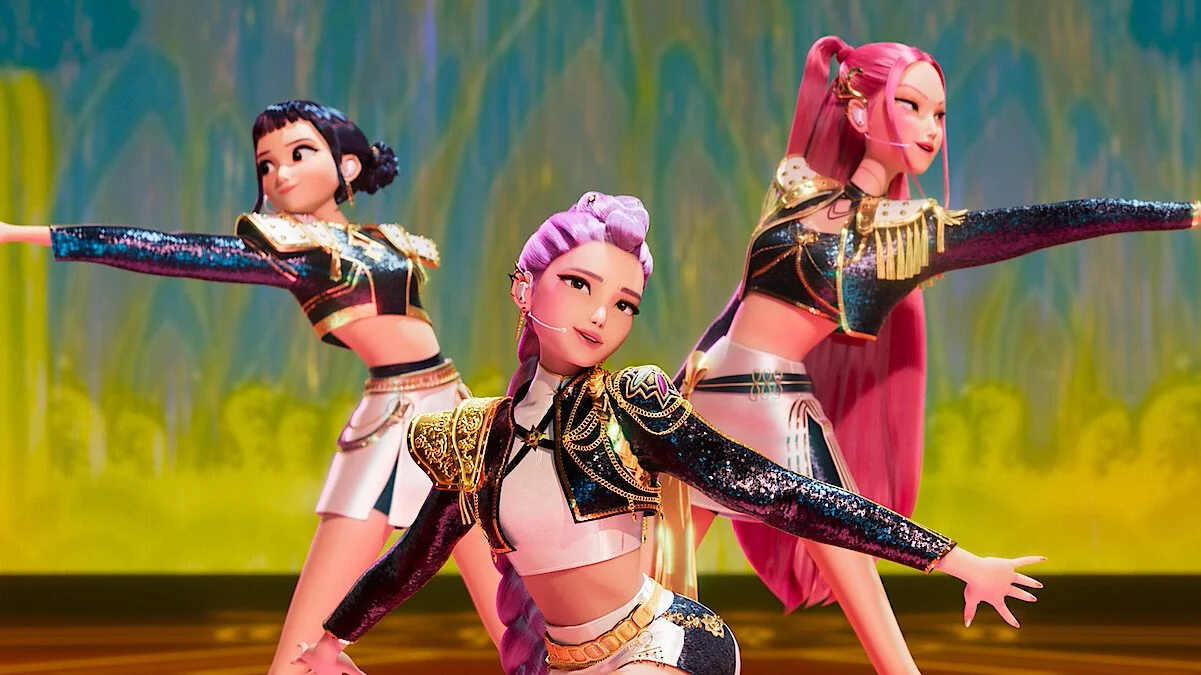
Image taken from Netflix
As such, the cultural force behind KPop Demon Hunters’ success was interesting to me. To many casual listeners, K-Pop doesn’t go past the few main groups, and most people form the impression that it’s just one big genre of either super cutesy or super loud songs – and this idea of it has even been satirised many times.
I might even argue that KPop Demon Hunters itself is a film that plays on this trope. Songwriter Ejae – the rejected idol who now has a Golden Globe for “Golden” – was behind every single song on the soundtrack aside from the bubbly “Soda Pop” (which happens to be my favourite one). A former K-pop trainee that never debuted, she switched gears to be a rather prolific industry songwriter, with some of her works being “Psycho” by Red Velvet and “Armageddon” by Aespa. In spite of her involvement in the scene though, I felt that the songs in the film still felt like a cheap imitation of the genre.
For instance, “Golden”, “Soda Pop” and “How It’s Done” are clearly written to represent the “quintessential” K-pop songs, with “Golden” often being accused of being a direct copy of “I Am” by Ive. This is where this portrayal of K-pop annoys me. As an industry with a pretty diverse range of sounds, it often gets misrepresented in popular media with clearly-outdated stereotypes. It doesn't help that even in KPop Demon Hunters, with all its good intentions and level of songwriting expertise, the music portrayed still lacks nuance and fails to show the diversity within its genre. Furthermore, songs like “Free” and “What It Sounds Like” sounded just like generic American pop songs to me – it lacked the bright colours, daring optimism, and experimental quirkiness that gave K-pop the idiosyncratic characteristics that it is known for.
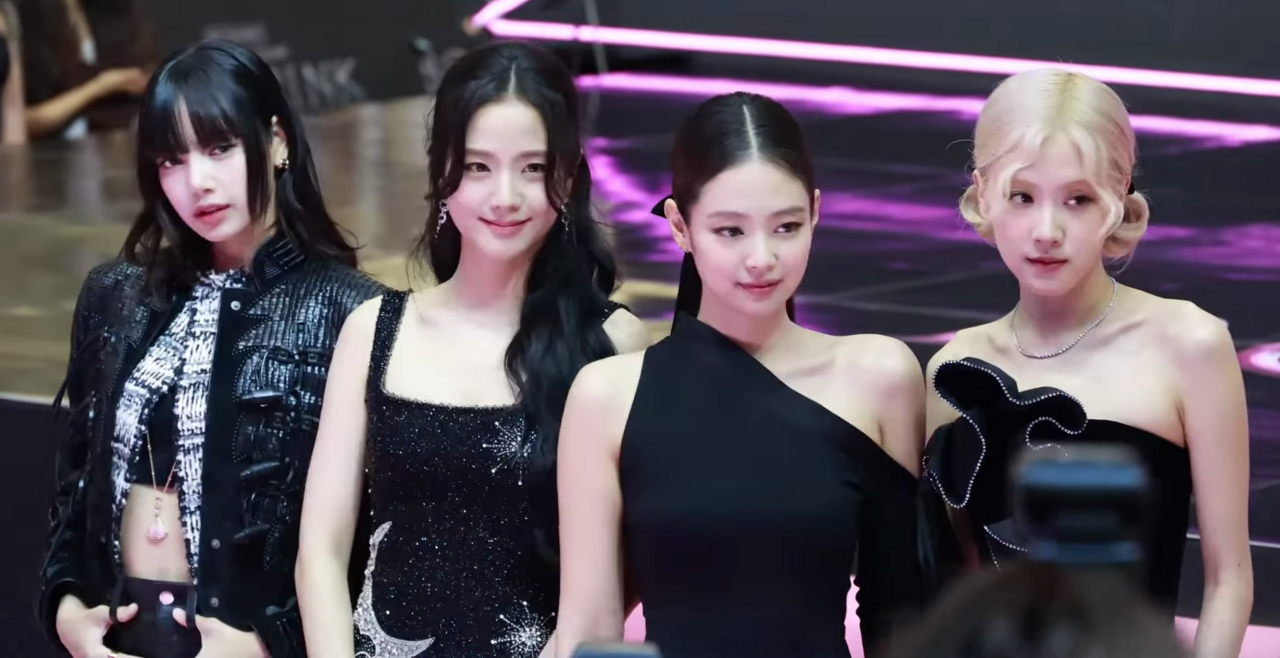
Image taken from Wikipedia
It also goes without saying that K-pop has changed so much over the years. After the third generation where we saw idols like BTS and Blackpink start to appear on the Billboard Hot 100 charts, the industry took a big shift to a more “Westernised” approach. More groups started to release fully-English songs, and fewer Korean started to appear in songs. A few years ago, I would have lamented about the lack of Korean in “Golden” – but this is a possibility now. This has definitely influenced the way this film was approached as well, where English still rules dominance (even in its songs). Korean motifs are still heavily portrayed in it though, ranging from real-life Seoul locations, to how the film’s famous Derpy Tiger is inspired by traditional Korean folk art.
I had initially thought of whether this popularisation and proclivity to appeal to the masses is a product of gentrification of the genre, but I feel that the genre in itself has always been constructed to do exactly that. It does not have a defining trait, and its stereotypical depictions are often outdated and reminiscent of the music from its up-and-coming era in the late-2000s to early mid-2010s.
As a longtime K-pop enthusiast, I think the most important lesson from Kpop Demon Hunters’ success is that there is now more room in the mainstream modern market to highlight and emphasise the diversity that exists within the world, even among the domineering Angolophone media scene. With the death of monoculture, and the rise of algorithmic curation, subcultures are seemingly seeping more into the mainstream. Spotlighting once-neglected corners of culture is now the trendy way for cultural shifters to communicate a change of demand and needs. Perhaps this heroic depiction of a long-misunderstood genre may be exactly the redemption that K-pop needs. From its positioning of the profession as a cool, life-saving job, to the nuanced duplicity that exist within Rumi and Jinu, it humanises K-pop idols and honours the genre as a crucial and influential part of mainstream culture.
IMAGES IN THIS ARTICLE ARE BEING USED UNDER FAIR USE GUIDELINES AS PART OF SINGAPORE'S COPYRIGHT ACT 2021.