
Music as Resistance in Malaysian Documentary Film Queer as Punk (2025)
Staff Writer Wong Dao En examines Malaysian filmmaker Yihwen Chen’s documentary Queer as Punk (2025), which chronicles the experiences of openly-queer rock band Shh…Diam! Foregrounding the deep connection between rock music and politics, to confront audiences with the knowledge that progress can only be achieved through continuous resistance.
What does it feel like to live in a place that refuses to acknowledge your existence?
Malaysian filmmaker Yihwen Chen sets out to answer this question in her new documentary film Queer as Punk, which follows an openly-queer Kuala-Lumpur based rock band, Shh…Diam! (ironically meaning “shut up”). She captures their private lives, live shows and other important moments with nothing other than a handheld camera, making the documentary an intimate encounter. The documentary spans multiple years, with pre-Covid footage, multiple general elections, and landmark moments all documented on film, where their passion for music and activism for LGBT rights is clearly exhibited.
The band, formed in 2009, plays gigs in underground locations from local to English bars, where transgender frontman Faris Saad unapologetically sings about their queerness. One such gig even took place in the ultraconservative state of Kelantan, where the band played in a hotel, which according to Saad, strategically made it a private venue, preventing police infiltration without a warrant. Faris then cheekily claimed that the predominantly-male crowd started grinding on one another as they performed. It then becomes apparent that many queer individuals living in deeply conservative areas are only able to express their sexuality freely without external judgement through their gigs. As such, Shh.. Diam!’s gigs have also extended past simply being music, to providing safe havens for others – one where they can seek solace and community in a place that they normally would be unable to.
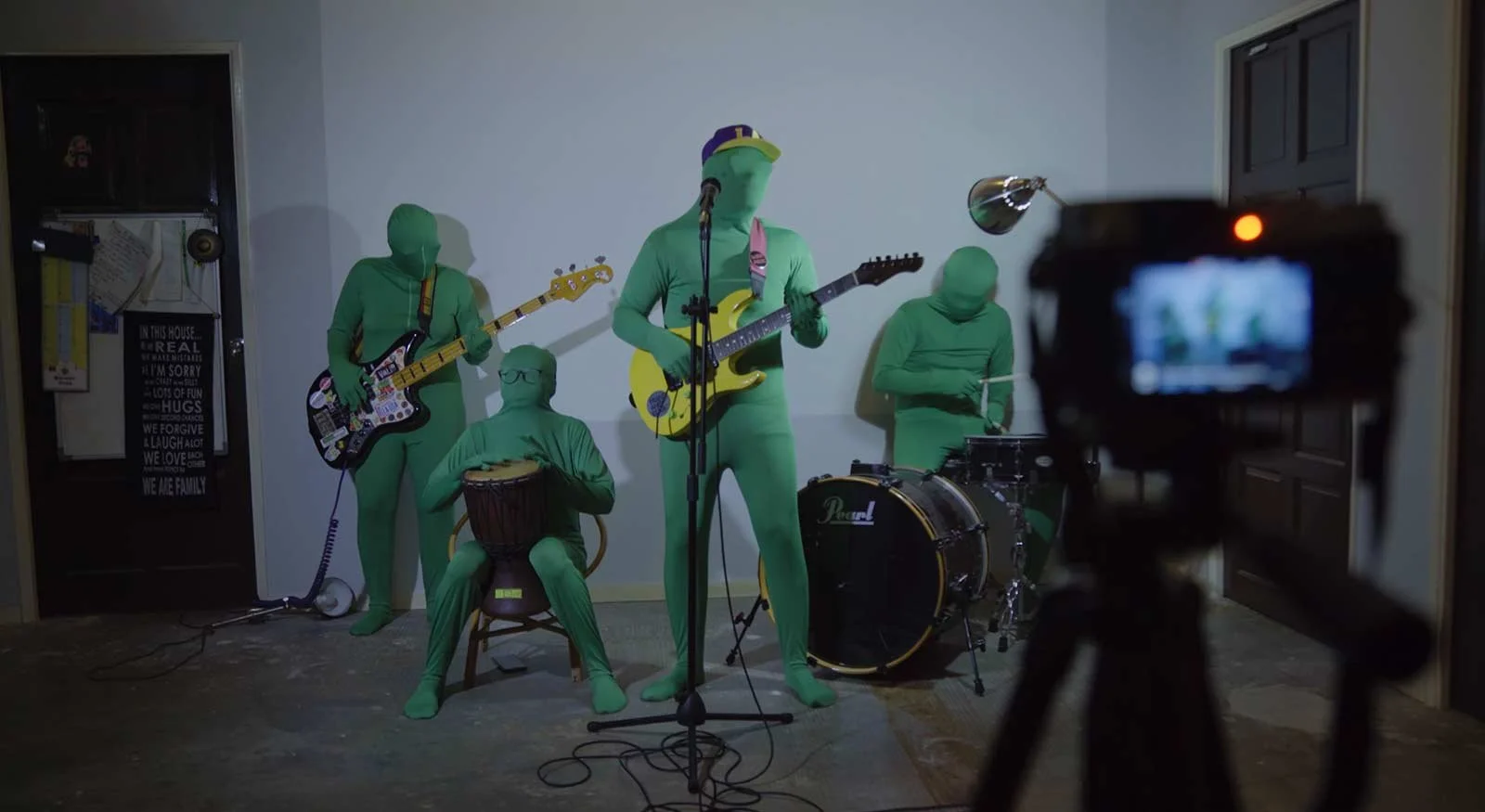
Image taken from SGIFF
Among their repertoire of songs is “Lonely Lesbian”, which the band claims was written as a satirical response to a local newspaper article on how to identify queer individuals. The article featured stereotypical depictions of queer individuals, almost as if a guide to expose them to the general Malaysian public, like a cautionary tale to identify and ‘avoid’ these people. The band uses instances like these to reclaim their oppressed identity and satirise microaggressions perpetuated by their government, treating such events with levity while also sharply criticising the inhumane attitude they receive for being who they are.
Their songs, which are in English, are tongue-in-cheek, brutally honest, and even vulgar at times. The self-deprecating humour and relentless boldness in their music, which is so closely tied to their identity, feels unconventional for music hailing from a famously conservative nation. But this unconventionality is exactly the group’s intention – their music is meant to be a form of resistance, against the conservative Islamist ruling party (at the time), as well as Malaysian society at large, challenging the masses to accept them for who they are, instead of blindly following arbitrary rules set out to marginalise individuals deemed as ‘different’ from what Malaysian society expects from its citizens.
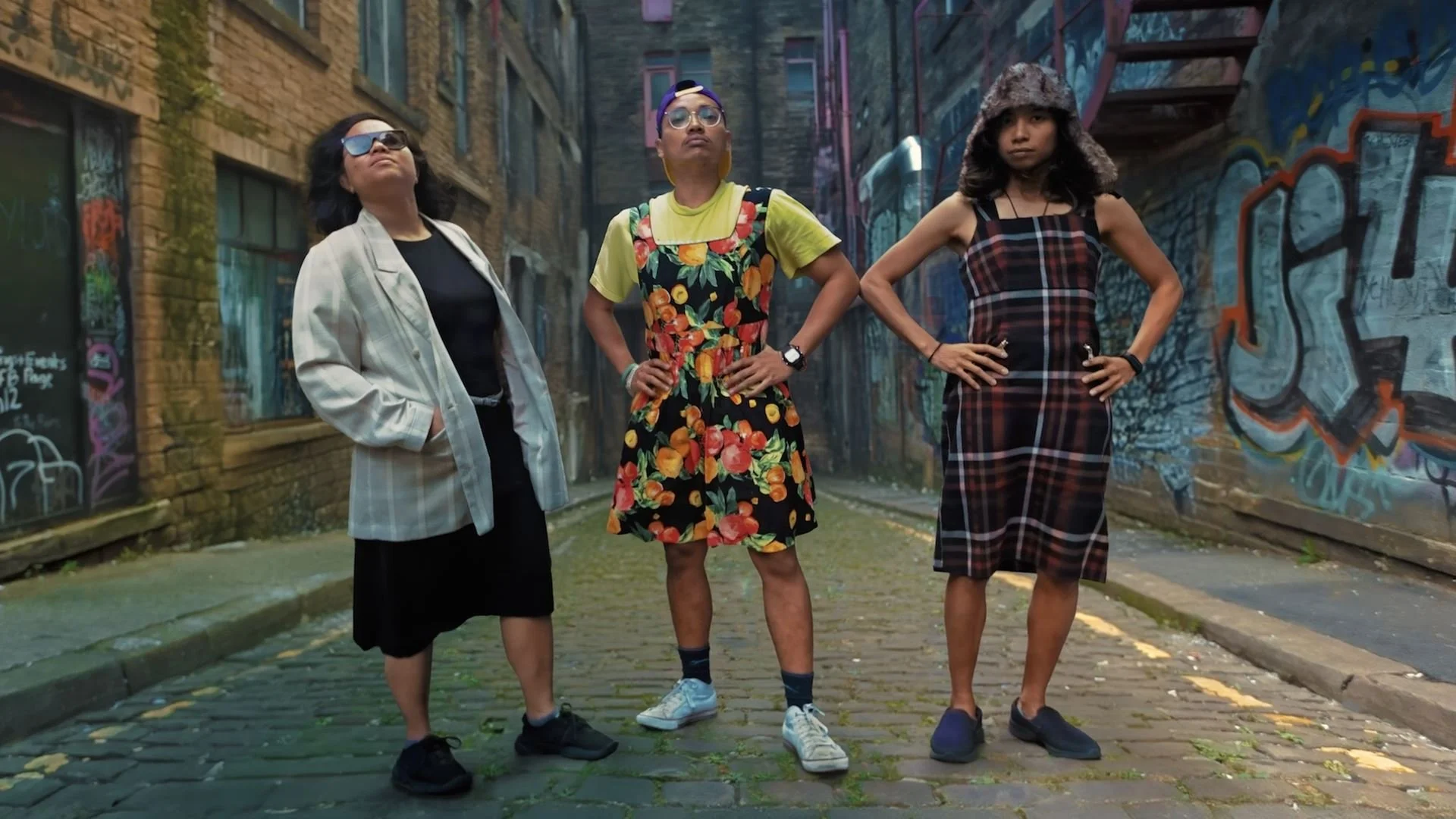
Image taken from BAM
The band’s resistance also extends beyond the stage. Throughout the film, the band can be seen not just undertaking gigs at events but also as active participants and advocates for the community. They partake in protests, engage in dialogues with the local queer community and brainstorm on ideas to protect the rights of persecuted queer individuals along with other activists. By highlighting these moments for the audience, Chen highlights the importance of queer solidarity, and more importantly, that the members of Shh..Diam! are not just musicians, but also daring activists. As music is so easily accessible, its close association to politics is often forgotten, but this further proves the importance of the arts against the backdrop of oppressive regimes and cultures. Hence, Shh.. Diam!’s music has evolved into one of political significance, and as a symbolism of resistance amidst the country’s oppressive laws.
Chen chooses to highlight several political milestones in the documentary, such as several Malaysian elections over the years. One of which was the 2018 elections, in which the ruling party lost their majority for the very first time. Faris celebrated enthusiastically with his members, stating that Malaysia will become a new country afterwards. Fast forward to the next election, however, Faris was less optimistic, and claimed that he felt nothing much this time round – which makes sense. It would be pretty difficult not to be cynical after having not seen much change in spite of gaining opposition support.
It then becomes apparent that the documentary’s focus on Malaysian politics seems to point to something larger – that Shh…Diam!’s music does not just stay within the confinements of a stage, but that it also extends out into the broader society as well. Their activism has proven to cause a ripple in local politics, and even when politics are concerned, it remains difficult to be optimistic in the face of incredibly slow progress. Even with gaining opposition ground, Malaysia yet still continues to target queer individuals. On 28 November 2025, well after the completion of this film, Kuala Lumpur police controversially raided a city-centre spa frequented by queer individuals, detaining 201 men in the process. Nonetheless, they failed to prosecute any of the arrested due to a lack of evidence that anyone was “coerced or exploited into prostitution or abnormal sexual activity”. Even though nobody was incarcerated, periodic raids like this threaten the livelihoods of Malaysia’s queer community. It also seems that the government is clear in its message: that being queer is illegal and immoral in Malaysia.
In spite of the bleak political outlook, Chen strays away from portraying the film in an overly resigned manner, but in no way is it an optimistic depiction either. Chen shows the rising eminence of the band’s status as the country’s only openly-gay band over the years, as they begin receiving interviews from more prominent media outlets – showing that perhaps that the fruits of their labour has started to show.
It appears that Chen approaches this film with this angle to speculate a possibility of a Malaysia able to accept diverse identities. Some of the stationary footage of the country’s capital city highlights the city’s multiracial identity – Chinese placards, Tamil signboards, and government tourism advertisements that ironically celebrate the city’s multiculturalism. Against the backdrop of a city whose culture is deeply ingrained in such a multicultural identity, the irony becomes more and more pronounced,and it also becomes clear that the dream of queer acceptance in Malaysia may be far out of reach. After all, Malaysia is not even fully accepting of its racial minorities yet, a good half a century after deadly racial riots led to the country’s controversial Bumiputera-first policy that marginalises the country’s Chinese and Indian citizens.
This makes the activism in the film even more admirable. Throughout Queer as Punk, the band members are hardly demoralised by their work; they are seen relentlessly fighting to keep queer individuals safe. They engage in proper ground work and convene with other activists when queer discrimination becomes spotlighted in the country’s media, for instance, when LGBT-friendly clubs are raided, or when same-sex couples are caned as punishment under sharia law. It is apparent that their activism is not just limited to sound waves.
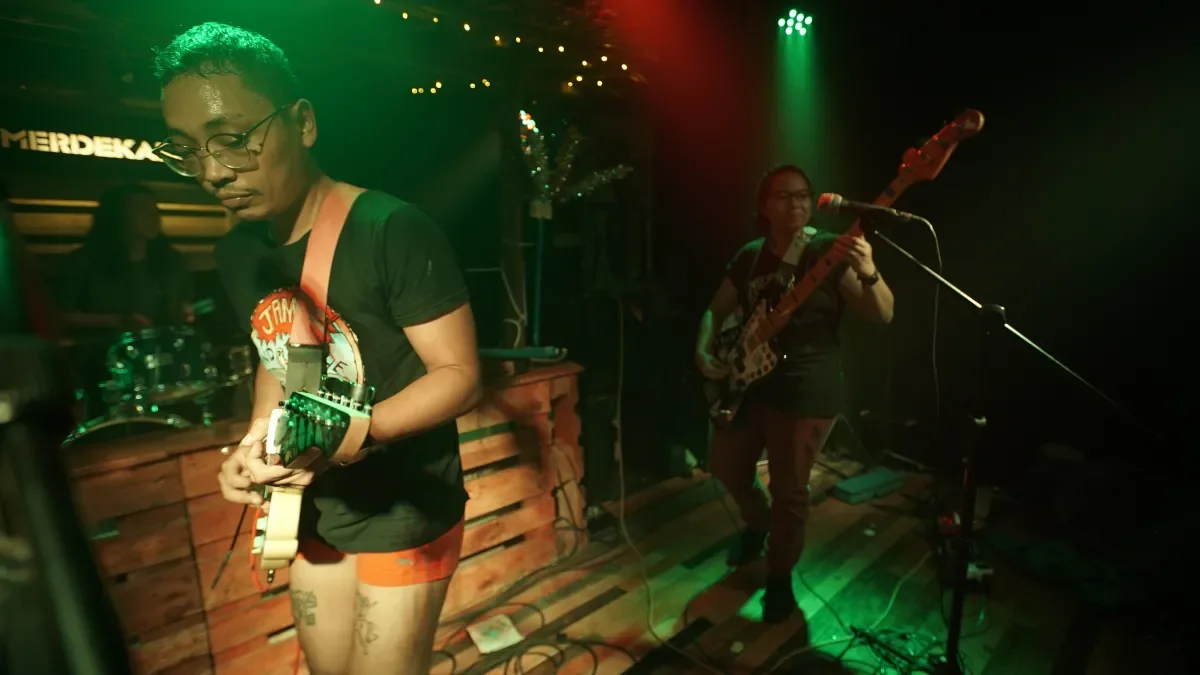
Image taken from International Documentary Association
It is clear that the members of Shh..Diam! are also passionate about their craft. And when music is their livelihood, their music then also becomes a part of their identity. And by extension, their existence itself defies the oppressive limits of their strict society. In a place where conservatives often have the upper hand, having your existence be a form of resistance can feel demoralising and unsafe. Queer individuals have to go to great lengths to have their existence legitimised, leaving a vacuum of queer talents in the country who choose to leave.
These circumstances are shown in the film, where a transgender activist decided to migrate overseas after increasing hostilities against transgender individuals, while another bandmate, Yoyo, chooses to leave Malaysia to marry her Irish partner in Northern Ireland. And yet, despite their departure, Yoyo, along with her colleagues, donned traditional Malay costumes during the reception. They do not disown their culture; they celebrate it in spite of the lack of acceptance over their existence.
This honest and nuanced portrayal of a community struggling to choose between freedom in another land and oppression in their home country shows the complicated challenges that Malaysian queer individuals have to face. As such, Chen successfully provokes her fellow Malaysians to question and challenge their preconceived notions of queer individuals by humanising them as more than just political pawns.
But Chen and the band knows that this fight is not so easily won in such a deeply religious society – or perhaps, not in our lifetimes – but alas, their activism shows their unwavering fight and resistance against the ruling class who oppress them.
Even in a fight that doesn’t seem to favor them, the band showcases that the effort and spirit behind the struggle matters, that the willingness to resist is worth more than not having one at all. After all, the contemporary definition of human rights didn’t just come out of thin air; as such, Chen immortalises the selfless acts of Malaysia’s queer activists in Queer as Punk, cementing them as fearless agents driving the country’s slow progress to LGBT acceptance.
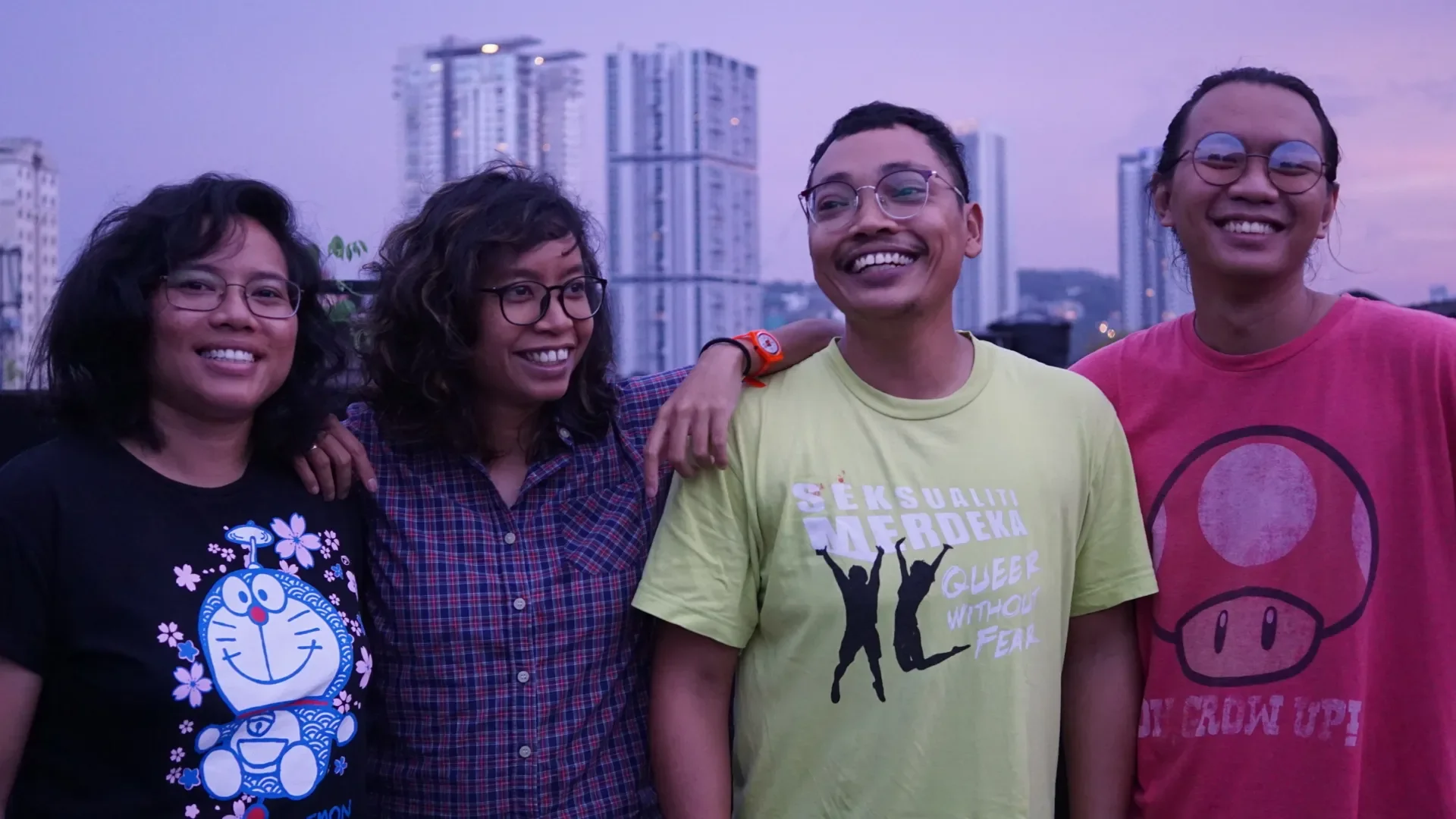
Image taken from VICE
And for many of us queer Singaporeans, who are just one bridge away from Malaysia, this film still hits hard due to our proximity and close relationship to our neighbouring country. Singapore also has limited recognition of same-sex relationships, but at least we abolished Section 377A – the same anti-sodomy British colonial law that Malaysia invokes to justify their arrests and raids a while ago – which further cements a small baby step towards future LGBT acceptance.
Much of Asia has also seen increasing LGBT-inclusive legislation. Thailand legalised marriage equality early last year, In Japan, existing same-sex partnership system covers 90% of the population, and many are anticipating a Supreme Court decision on whether a same-sex marriage ban is unconstitutional. And in South Korea, same-sex couples will be counted in the census for the first time.
And while the current political landscape looks bleak due to a rise in conservatism worldwide, Shh.. Diam!’s activism in a nation that seems to be far from LGBT acceptance is inspiring to many of us around the world. It is important to show up, to remain optimistic, and to stand up for what one believes in even if progress seems out of reach, because as the saying goes, you miss all the shots you don’t take. If we do not even try, then how can we expect any progress at all?
Images in this article are being used under Fair Use guidelines as part of Singapore's Copyright Act 2021