
A Spiritual Death: To Kill a Mongolian Horse
Staff Writer Adrian Ho dwells on the themes explored in Jiang Xiao Xuan’s To Kill a Mongolian Horse–tradition fighting to survive against the forces of modernity, and particularly how the film highlights the exploitative machine that is capitalism.
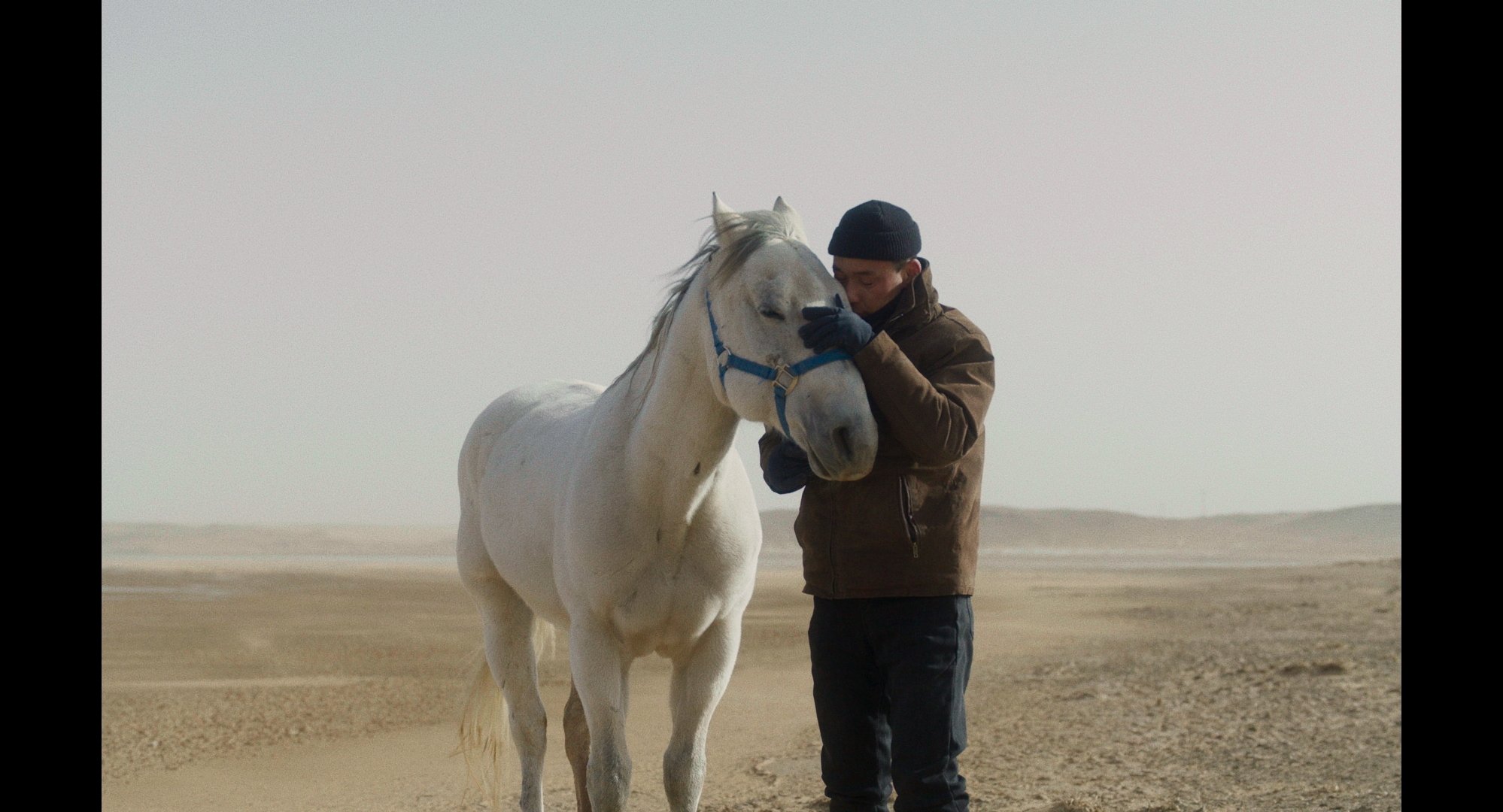
Image taken from Giornate degli Autori
Everything in Jiang’s To Kill a Mongolian Horse (2025) signals futility and the despairing state of a capitalistic world. The film, set across the barren and arid landscape of Inner Mongolia, is an elegiac portrait of a time not yet lost – of herders and horseriders forced into a modern way of life. To Kill a Mongolian Horse follows a man caught in between, a liminal character that oscillates between his childhood home in the steppes of Mongolia, and the life he leads in the city. Saina is a man adrift – the last hanger-on in an inhospitable world that has shifted with the tides of time. His alienation, further complicated by domestic situations, including his gambling addict father who is deep in debt, and an estranged wife who has begun a life in the city without him, his child in tow. Saina spends the film desperately hanging on to his past but finds himself in a losing battle.
The film begins with the moments leading up to a Mongolian horse-riding show, with the horses waiting in a dingy backroom in a cramped stable and Saina patching himself up, steeling himself for another performance. When the stagelight turns on, the myth is maintained and the spectacle is one that verges on the sublime, but something is missing. For passing eyes and curious tourists, the local Mongolian culture is immortalised but what remains of that culture is simulacra – in reality, it dies out.
To Kill a Mongolian Horse is not necessarily as romantic as the classic American Westerns, waxing lyrical about the imposition of civilisation and the encroaching tides of time, heralded by the roar of the steam engine, but it does find heroism in the efforts of a man who futilely tries to sustain a fading way of life. This is a film that largely relishes in its simplicity and tells an all-too-familiar tale of tradition against modernity. For Jiang, the futility of Saina’s efforts takes on a symbolic quality, but his story is also grounded in a search for an identity that has been stolen amidst the loss of a homestead and the knowledge that his instinct as a horserider serves no purpose in this modern world.
Saina may be able to convince himself that the horse-riding shows he performs in are a necessary evil that has to be undertaken to maintain his way of life, but through the runtime of To Kill a Mongolian Horse, Saina is repeatedly asked what he is willing to sacrifice to maintain the status quo. The futility of earning money in the city to sustain the life of a herder may be quietly ridiculous but it is not the straw that breaks the camel’s back. The final nail in the coffin, the metaphorical roar of the steam engine, comes in the haze of a dust cloud and the earth-moving vibrations of heavy machinery. Jiang captures the mechanisms of capitalism plainly – as exploitation, of labour and of land. As developers render the steppes of Inner Mongolia unsustainable for living, Saina is handed the ultimate disgrace of relinquishing his homestead for money. Saina is forcibly brought into the fold but as the lingering final shot would indicate, he has already suffered a spiritual death.
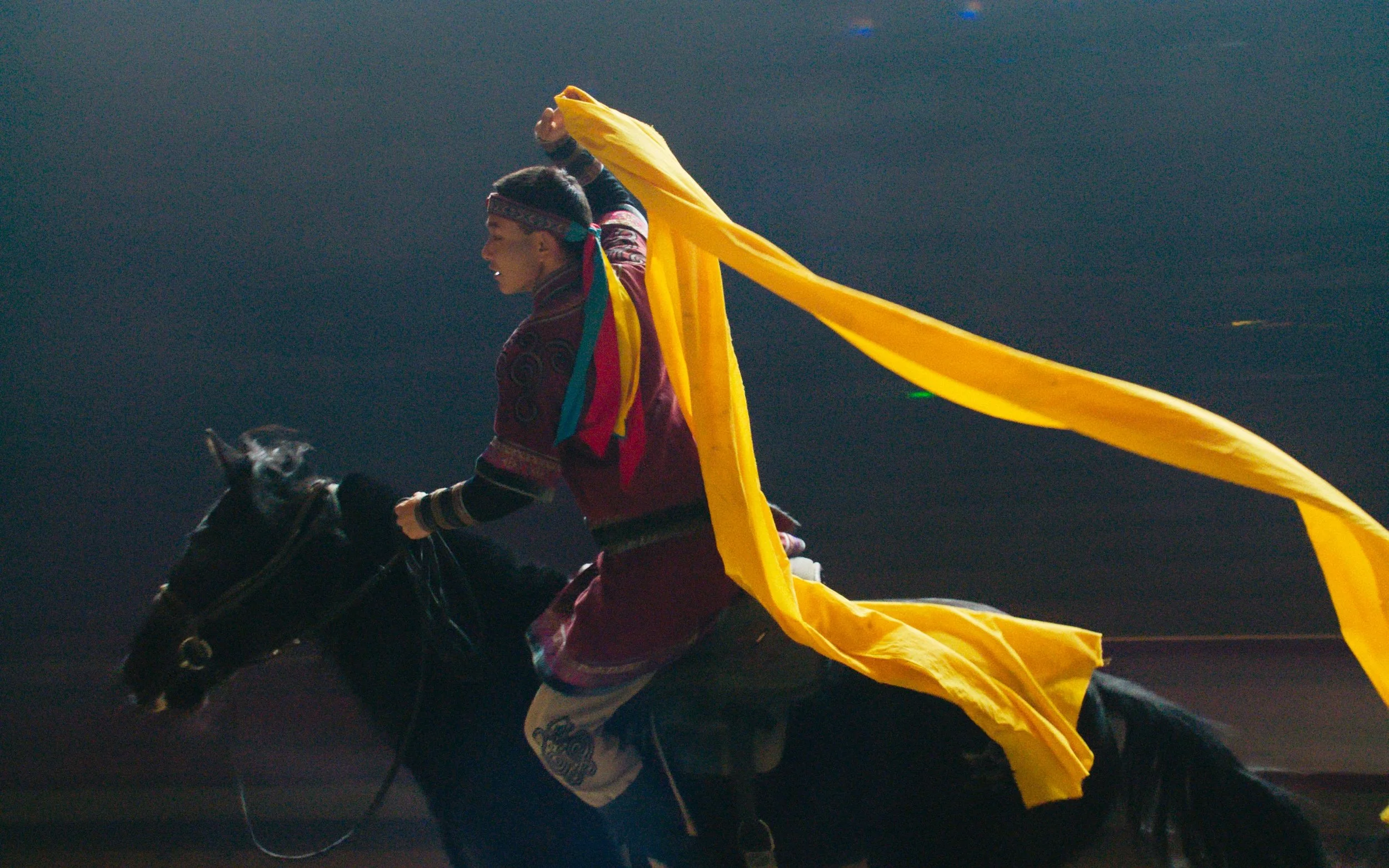
Image taken from IMDB
Images in this article are being used under Fair Use guidelines as part of Singapore's Copyright Act 2021.