
Contemporary Anxieties in Human Resource (2025)
Staff Writer Adrian Ho reflects on the harsh depiction of contemporary life in Nawapol Thamrongrattanarit’s Human Resource (2025), relating the film’s endless toil and alienation to our own realities.
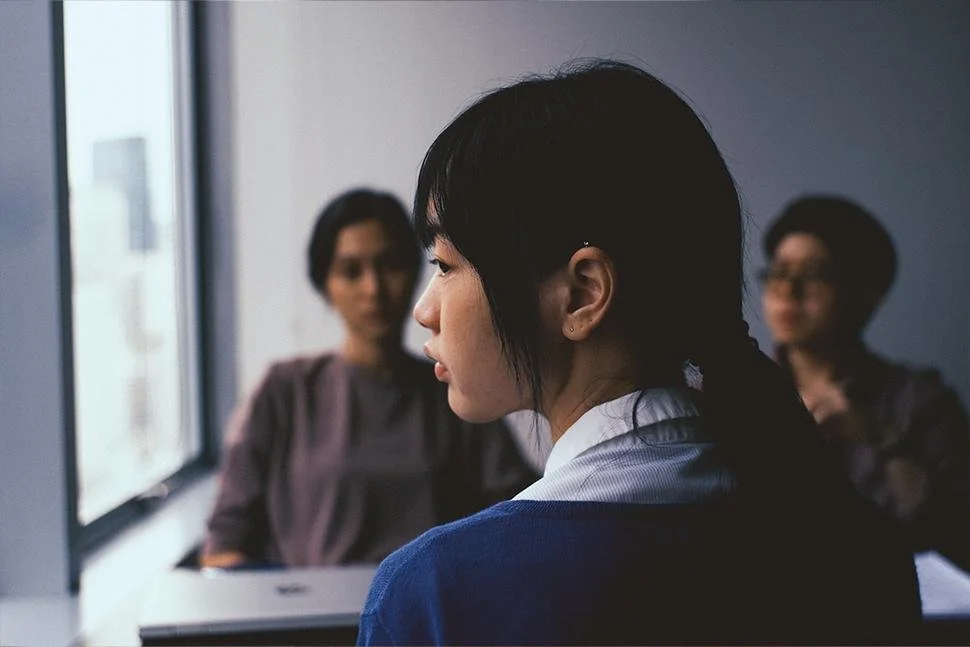
Image taken from La Biennale di Venezia.
Sometimes, living can be a lot. Especially in a time like ours where we are constantly bombarded with constant updates persuading us how dire the present is, and how bleak the future seems. From political instability and economic uncertainty, to technological disruption and climate change, all these are amplified by the fatalistic feedback loop characteristic of social media. Even our films seem to reflect the inhospitability of our current moment and have embodied our contemporary anxieties in a variety of nightmare-inducing scenarios.
From Paul Thomas Anderson’s One Battle After Another (2025), and his exploration of activism and human connection amidst a highly polarised political climate, to Ari Aster’s Eddington (2025), and the use of the pandemic as a metaphor for the fracturing social fabric of America and the isolating and parasitic influence of social media. Even Park Chan-wook’s satirical No Other Choice (2025) provides social commentary on the brutality of the capitalist systems and the desperation of its forced participants, who feel the need to compromise not just their morality, but their humanity just to survive.

Image taken from Variety.
And amongst countless others is Nawapol Thamrongrattanarit’s Human Resource (2025) — a film that centres around Fren, a young woman in the early stages of pregnancy. In the film’s opening scene, her doctor advises her against stressful situations but that's easier said than done as Fren works in the HR department of a toxic company with a volatile and abusive boss. Thamrongrattanarit, though not as well known a filmmaker as those above, has certainly carved a reputation for himself in Thailand and on the international stage — with films such as Mary is Happy (2013), and Happy Old Year (2019) — as a filmmaker with a strong sense of lyricism in his works, transforming introspective character studies — typically focused on young people, mostly women — into films that quietly dismantle audiences by the curtain close. Human Resource follows a familiar pattern centering on Fren's navigation of the corporate world, but with the notable absence of Thamrongrattanarit’s familiar lyricism.
Instead, what audiences are subjected to is an austere film that can often feel punishing throughout its two-hour runtime, sporting a cynicism about the present and the future that frames the world as inhospitable and of dire straits. Human Resource is prone to long takes that stretch into silence, and what occupies this negative space is a seemingly endless stream of daily news from radio stations, TV channels and social media—from the effects of micro-plastics in our bloodstream, to rising violence in the country and unavoidable economic recessions. All this humdrum bombards both Fren and the audience, amplifying our shared feelings of disenchantment and contemporary anxieties. Thamrongrattanarit impressively shapes this existential dread through his stylistic and formal choices, such as the antiseptic urban setting, enhanced by the often alienating cinematography, and the monotone, sometimes repetitive, nature of the scenes within the film. Human Resource doesn’t build to any moment of catharsis, only an endless parade of labour that makes life feel Sisyphean. Visually then, the film’s minimalist realism lingers as a reminder to audiences that the unfolding fictional story is not unlike our own.
The mechanical and detached nature of the film is also mirrored in our protagonist Fren, who moves through the world as a silent passenger, sometimes literally, like in the scenes where she returns home from work with her boyfriend Thame. She observes the world around her, seemingly deep in contemplation, perhaps ruminating: is it right to bring a child into a world as hostile and full of suffering as this? Or is it—like coercing new hires into the brutality of an asshole boss—akin to bringing lambs to the slaughter? Thamrongrattanarit leaves us with no definitive answer. In fact, Human Resource refuses to come to a conclusion or show any signs of change. Rather, we are left to sit with our observations—of a vicious system designed to grind us down, of our lack of agency in inciting change, and of the heavy burden of living. Though, perhaps like Fren, we are still afforded the opportunity to shape our coming response.
Images in this article are being used under Fair Use guidelines as part of Singapore's Copyright Act 2021.