
Longlegs (2024) Blames the Devil for Man’s Evil
Staff Writer Mohamed Shafiullah reconsiders the elements that made Oz Perkins’ Longlegs (2024) such an effective thriller while anticipating his new film Keeper (2025).
Oz Perkins’ Longlegs (2024) bears all the hallmarks of a great thriller–a visually disturbing serial killer who speaks in ominous sentences, a detective protagonist with a mysterious past, and a morally ambiguous twist to wrap it all up. Supported by the compelling performances of the cast, the chilling sound design and stellar cinematography, Perkins succeeds in creating an intriguing story that makes Longlegs a must-see. But most of all, he abides by a golden rule often ignored in today’s Hollywood: he doesn’t treat the audience as idiots. Instead, Perkins trusts them–feeding us with just enough crumbs and hints to piece the mystery together, without trivializing everything–making the payoff even more satisfying and thrilling.
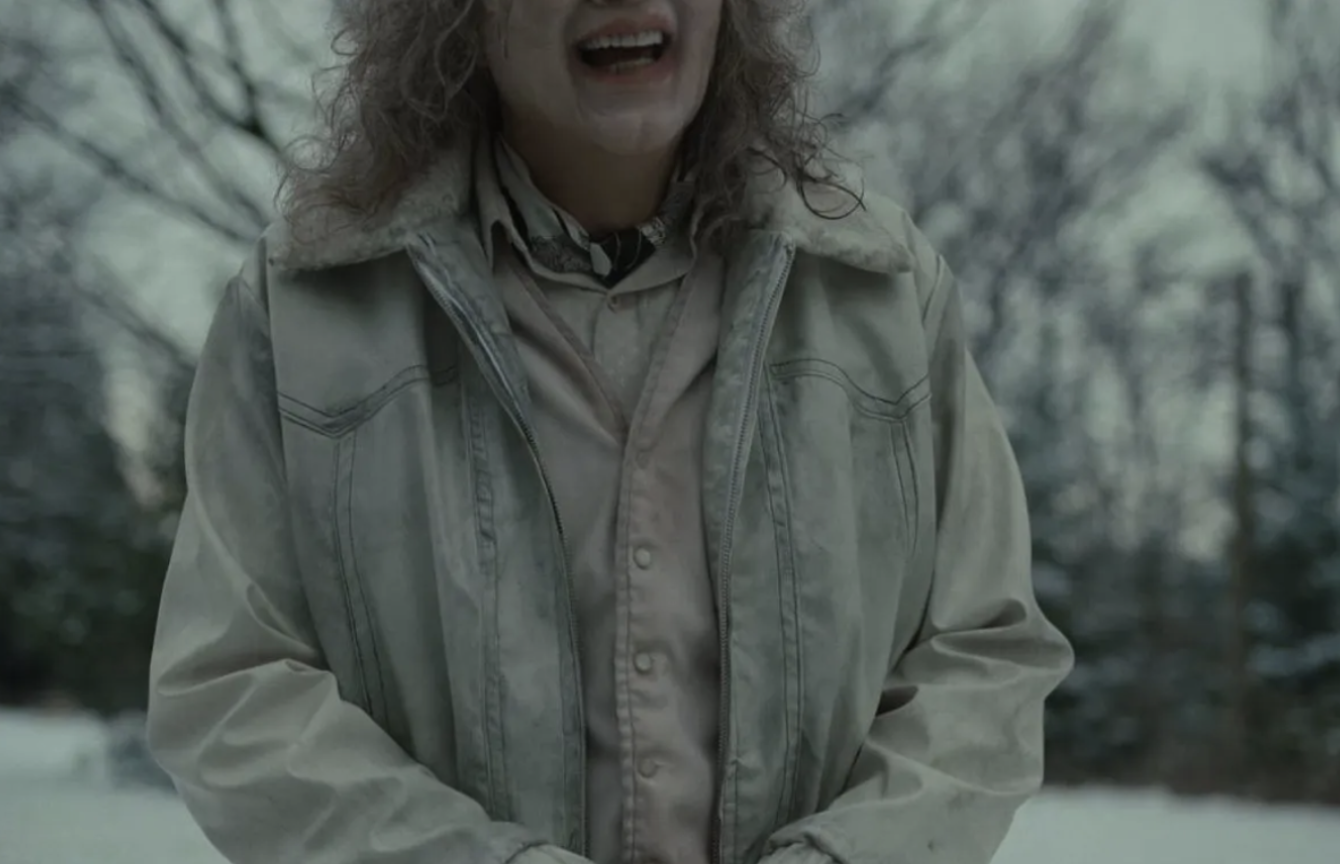
Image taken from Medium
Nicholas Cage is (nearly) unrecognizable as the creepy titular Longlegs, his face saddled with heavy makeup and prosthetics to recall the slippery slope of botched plastic surgeries. Most actors might consider the antagonistic role in an indie film a risky or unnecessary challenge to take up. And yet, Cage has never shied away from the more unconventional roles–from the anti-John Wick-esque Pig (2021) to the meta-play about himself, The Unbearable Weight of Massive Talent (2022). In Longlegs, his performance furnishes even the most terrifying scenes with a little camp flair and danger, contributing to the film’s deeply unsettling atmosphere. An aggressive villain would have been antithetical to the subtle but discomforting horror the film invokes, so Cage’s silently menacing portrayal of a madman fits the film’s tone perfectly. Opposite him, emerging scream queen Maika Monroe, as FBI Agent Lee Harker.
The film’s sound design is just as impressive as its casting. Perkins felt that the heavy sounds of rock’n’roll would mesh well with the satanic elements of the film, which gave the sound designer Eugenio Battaglia tons of creative ideas on how to go about designing the soundscape of Longlegs. As Battaglia attests to in a Variety interview, he rubbed towels over microphones and whispered over them to create the creepy sounds we hear in the film. He also utilised short orchestral bursts and pulled back the volume of the background sound design–letting it complement the booming natural sounds (doors creaking, footsteps echoing) instead of overpowering them–to create a subtle and subliminal tone that Battaglia felt would leave audiences in a state of peril, anticipating a jumpscare even when nothing was happening or going to happen.
Unlike so many horror and thriller films that end up obsessing over the fear factor of it all, Longlegs is able to deliver on both the fear and the (emotionally relevant) form. In its framework of unsettling unease and creeping dread, it implements a tale as old as time: what would a mother not be willing to do for her child, or arguably more importantly what would a mother be willing to do for her child?
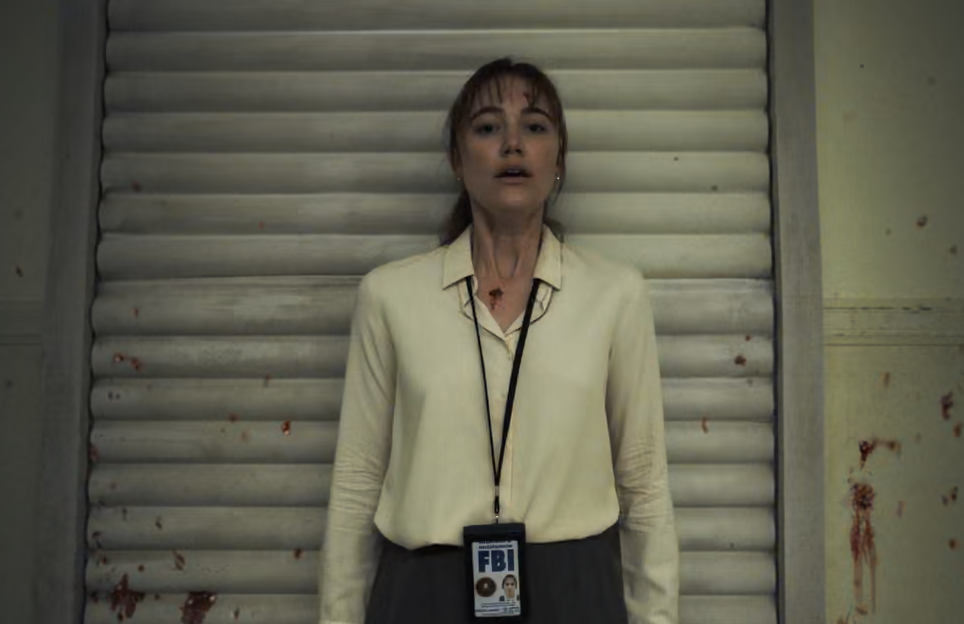
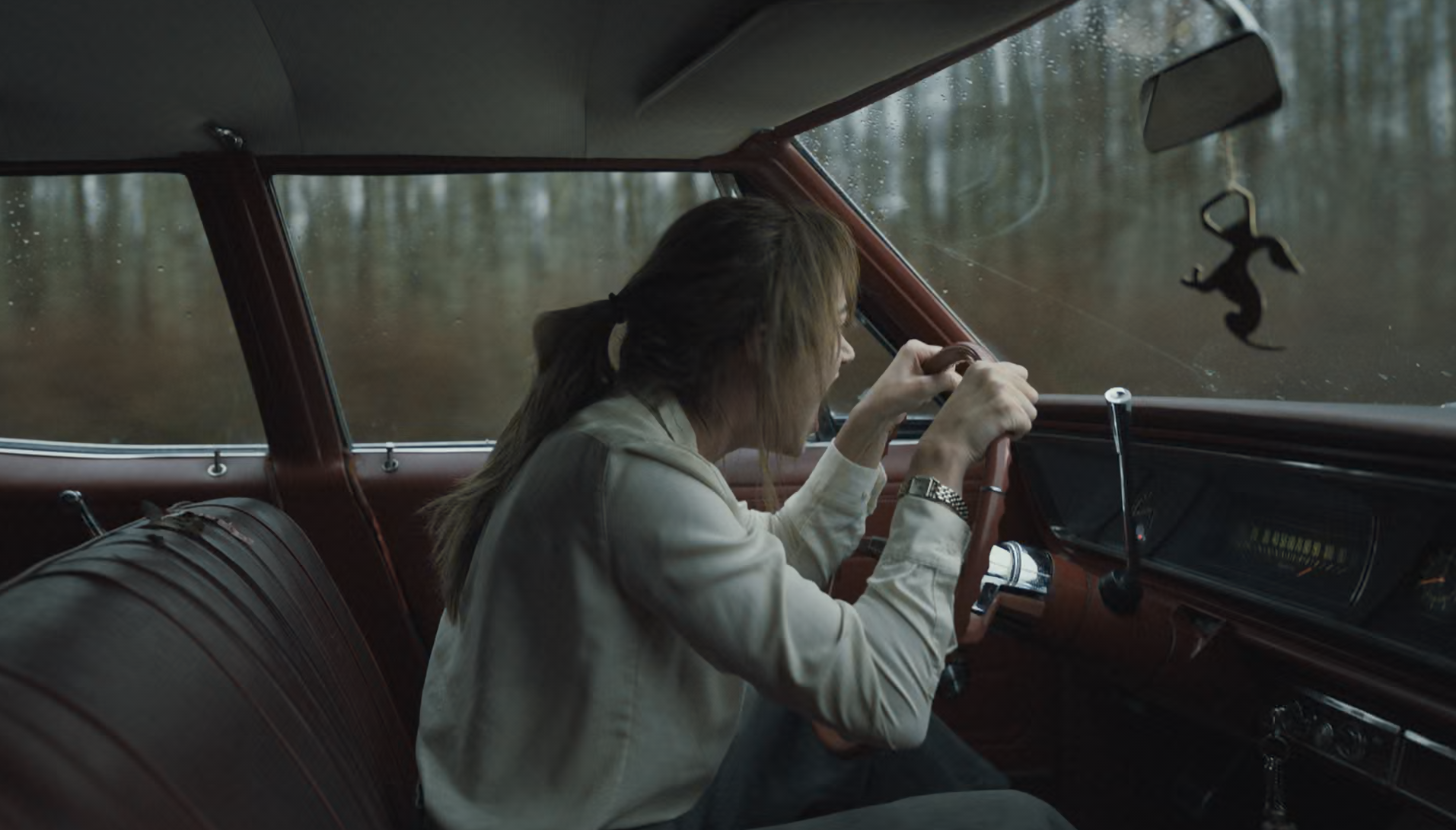
Longlegs answers this question with ‘anything and everything’. The mother of the protagonist makes a deal with the devil, delivering on it time and time again. Families are slaughtered just for the protagonist to get to live her life. Audiences, especially those on the cusp on motherhood, would surely reconsider their relationship with their children. Do they feel the mother in Longlegs was justified, doing what she can for her daughter to counteract the devil itself? A major theme in the film is insurmountable evil, and how people react in the face of it.
People like Harker’s mother do not attempt to understand it but instead protect their loved ones at the expense of others (the mother chooses to carry out the Devil’s murders in order to spare her child the same fate), while people like Harker are willing to put themselves at risk for humanity and go against those they love for the greater good . This is perhaps very relevant today, and the film might even work as a microcosm of the way a globalized world reacts to the genocides that rage across the Middle East and African continent (parallel to the insurmountable evil that is ever-present in the film). Indeed, some people echo the mother, not making an attempt to understand and instead just protecting their loved ones, while others mirror the protagonist, willing to go beyond themselves and their loved ones to protect humanity.
But perhaps Longlegs suffers when Perkins only reveals the presence of a satanic, supernatural entity at the end. A near-perfect film–because no film is ever perfect, except maybe The Room (2003)–that has so far revealed itself to be a grounded, realistic, thriller-in-the-real-world pulls the blinds further to disappointingly reveal that the Devil was responsible all along.
Why do we as audiences seem to universally hate it when a good thriller becomes supernatural? Perhaps it is a sense of being lied to, where we try to understand a film in the context of its grounded reality but are then told we have wasted our time, because look, it was the Devil after all! Throughout Longlegs, we are intrigued by how the serial killer operates and how he could have possibly committed such crimes, trying to piece together a mystery and the protagonist’s place in it. So when the ending reveals that the devil has been controlling the serial killer all along, the human piece of the villain, his personal nature, is lost. That the blame is ascribed wholly to the Devil takes away from what could have been an interesting exploration of exploitation, not to mention it leaves what started out as multidimensional characters as somewhat cardboard cutouts. In lieu of an interesting character study, the revelation of the movie’s demonic source gives us a boring cop-out that lacks any interesting character exploration.
We can also flip this argument. To some of us, the revelation that the Devil was behind the actions of a killer was perhaps not a boring cop-out that fails to give human agency or dig deeper into the human psyche, but rather the opposite; it forces us to think deeper, to make sense of senseless violence. We have an innate pull towards expecting actions, horrific or otherwise, to be borne out of grounded rationality, logicality. We see that a serial killer was abused as a child and we do not condone his actions but we understand him, pity him. But the rationale for Longlegs to kill, and his victims to commit murder-suicide, has no proper logic that we can decode; there is only the unexplainable evil of the devil we can point to–no longer does one need to have a logical explanation to kill. The capacity for humans to inflict violence is no longer anchored to reason, reason that we as humans crave in trying to make sense of our world. This unexplainability can unsettle us, force us to confront parts of ourselves that we might find unexplainable, and we hate the ending of the film when we see that no reassurance is due.
Alas, the awkward turn to supernatural reasons is not unique to Longlegs, and many psychological thrillers before it have made the same fatal mistake of turning supernatural awkwardly. Perkins’ new folk horror film releases soon in Singapore, on the 27th of November. We can see if he treats the natural and the supernatural any differently.
Images in this article are being used under Fair Use guidelines as part of Singapore's Copyright Act 2021