
vOilah! French Film Festival Review: Stories & Threads in Couture (2025)
Staff Writer Isabel Ng Cardoso examines the patchwork of narratives that Alice Winocour weaves in Couture (2025), ruminating on whether the film and its title is an accurate reflection of the definition—or simply an echo of it.
Couture: the act of sewing together a sophisticated, tailored piece of clothing.
Sewing is a delicate craft, one that Director Alice Winocour attempts to practice in her newly released film, Couture (2025). While her attempt to bring together the stories of different women during Paris Fashion Week may appear to echo the aforementioned definition, the pieces of cloth she’s chosen just don’t seem to weave perfectly together.
The film features the widely-acclaimed Angelina Jolie as our main protagonist, Maxine, a highly-ambitious American indie horror film director tasked to shoot and produce a short film to introduce the Paris Fashion Week runway show. Midway through the shooting process, we find out that she has been contending with the harrowing diagnosis of an aggressive breast cancer. This diagnosis plagues her mind and we watch as she figures out how to balance her health, worklife, and lovelife– all alongside the burden of keeping this a secret from her daughter.
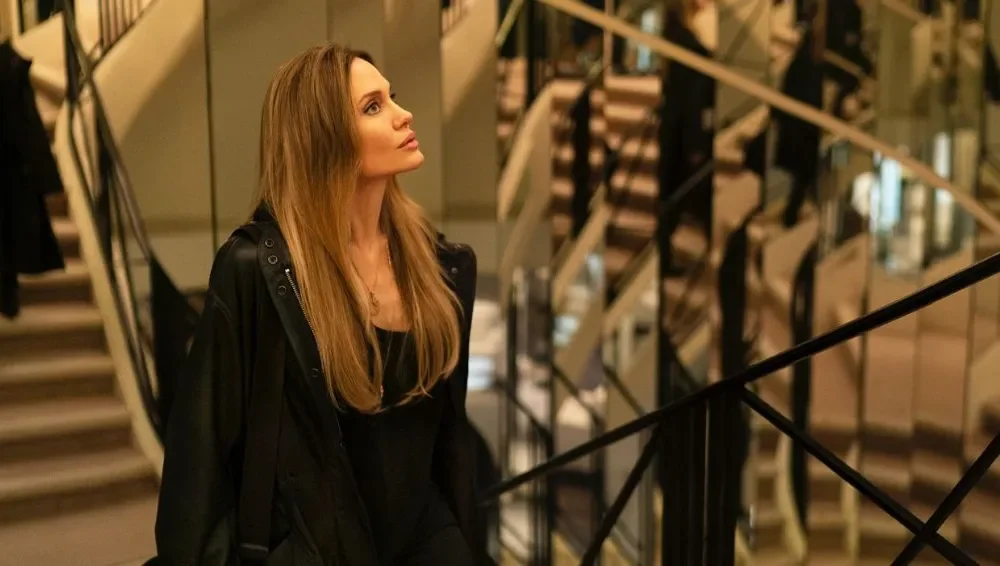
Image taken from Variety
Couture widens its narrative lens by presenting the audience with the stories of two other women whose lives briefly intersect with hers. A young South Sudanese Pharmacy student and aspiring model, Ada (Aniyer Anei), got her golden ticket when she was handpicked by Maxine herself to star in her short film. Faced with the unfamiliarity of the bright lights, we follow the 18-year-old through her journey of finding her place in this new deceptive and pretentious environment. Another dreamer–Angèle (Ella Rumpf)–is our veteran French makeup artist who is seeking to be a writer, drawing upon her client’s stories to draft her narrative. Throughout the film, we are also shown the challenges she encounters, such as convincing her critical writing coach of the merit of her story, and trying to figure out how to balance her personal and work life.
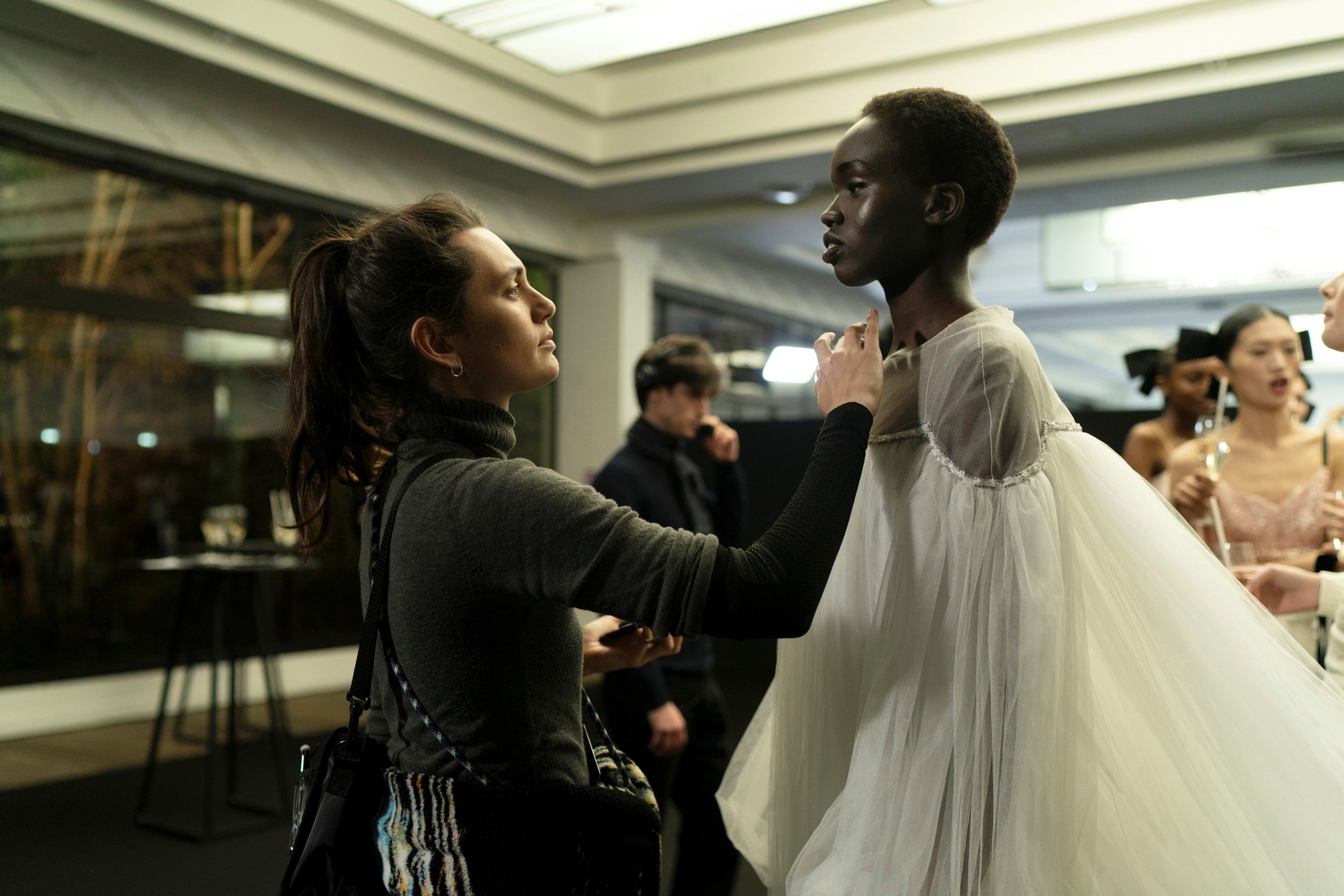
Image taken from IMDb
Although most of Couture’s reviews end their character introductions with our main three women, I feel that is only apt to spotlight our passionate seamstress, Christine (Garance Marillier) as well, who works tirelessly behind the scenes to create Ada’s flawless dress. The scenes we have with Christine act as an ode to the professionals who oftentimes go unnoticed in the frenzy of such high-profile events despite playing such an important role in the creation of the gorgeous works of art; and this acknowledgement is what I genuinely did appreciate in this film.
Winocour’s exploration of supportive networks between women in the high-fashion industry is an apparent theme throughout the film, but particularly evident in a scene between Ada and Angèle during Ada’s professional photoshoot. When Ada’s inexperience with posing and her unexpected period caused a delay in the shoot, Angèle responds without hesitation or judgement–calmly wiping the blood from her leg, providing her with tampons, and offering advice on how to pose. In its brevity, this exchange crystallises the film’s core message: women quietly supporting one another even in high-pressure and unforgiving environments.
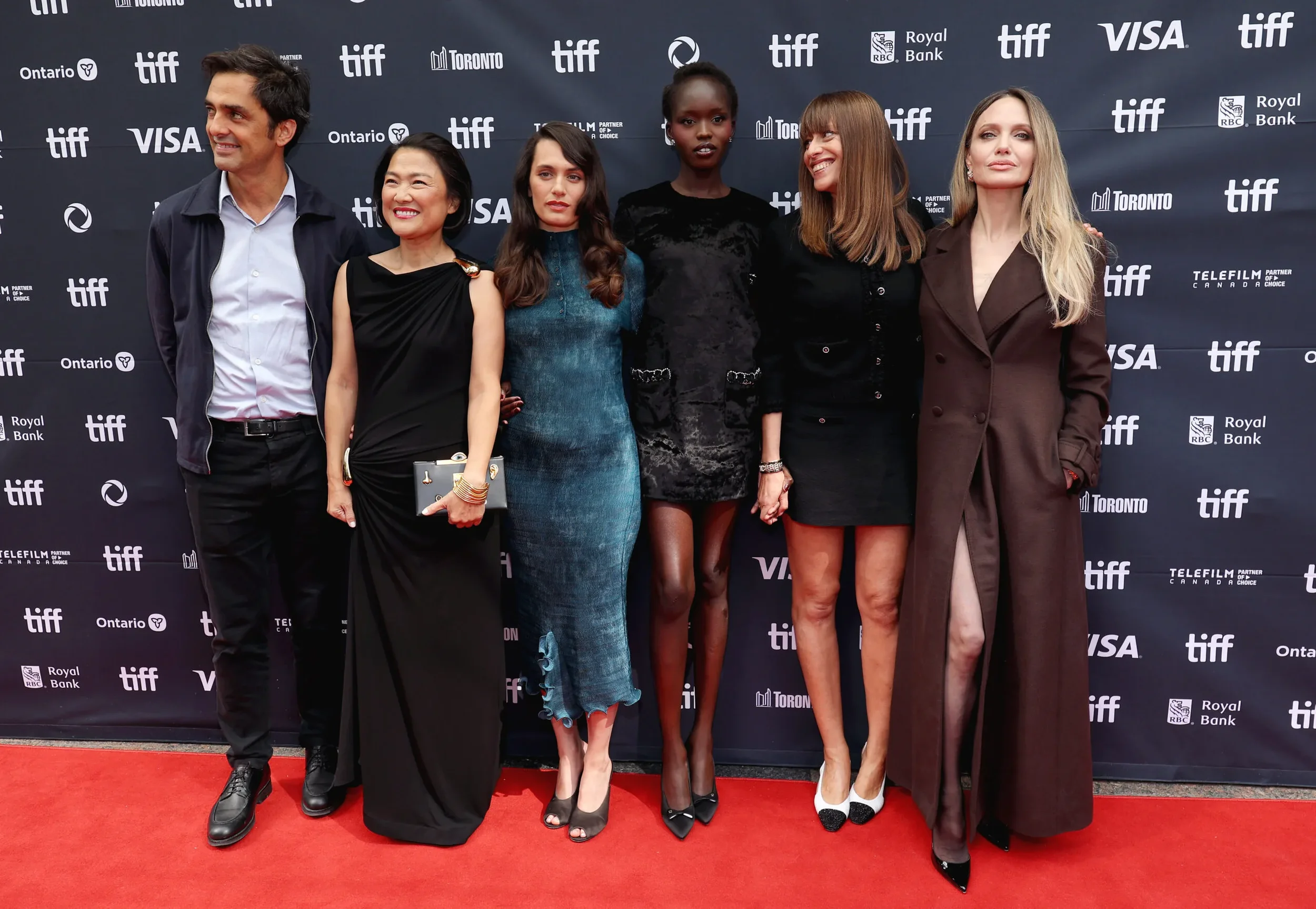
Image taken from The Australian Women’s Weekly
While there is undoubtedly potential in Couture’s unique premise, the film’s script unfortunately disappoints. Even though there were brief moments between the female characters, as previously mentioned, the film’s main themes of shared womanhood and the struggles women face in creative spaces are not explored in-depth, causing the film’s storylines to feel more fragmented than united. Other than the fact that these women have an incredibly limited screen-time together, Ada’s and Angèle’s stories barely serve contrasts or supporting acts to Maxine’s highly personal and dramatic storyline. Had the film woven their storylines together more actively–be it through shared moments of vulnerability or subtle parallels in their struggles in the industry–it could have cultivated a stronger sense of collective womanhood.
This missed opportunity becomes especially clear in Maxine’s interactions (or rather, lack thereof) with Ada. One would expect some profound exchanges between these two driven women to occur during the shooting process at the very least, and yet the film does not present us with that at all. Instead, we only are offered only glimpses of Maxine at work as she directs Ada on what to do in the main scene before she conveniently slips away to receive her diagnosis mid-shoot. I remember sighing out loud in the cinema as I watched the two characters just diverge paths without even a brief personal conversation or symbolic exchange with each other. Moments of compassion or connection in the whirlwind of chaos could have added more depth to each character’s arc, a testament to how camaraderie can grow even in a competitive environment. Instead, the lack of intention in the writing wastes a perfectly good setup.
To make matters worse, the dialogue between characters were either incredibly abrupt or fell short in conveying the emotional depth necessary to drive home a point. For example, in the rare instance where we see Maxine interact with Angèle just moments before the fashion show, Maxine bluntly tells Angèle that she has cancer with no prior build-up to this intimate interaction. This out-of-the-blue dialogue piece is doubled-down with Angèle’s awkward response to this statement–an indelicately managed exchange on such a sensitive and heavy topic which made it uncomfortable to watch as rushing past the moment without giving Angèle the space to process or respond in a meaningful way undermines the weight of Maxine’s confession. Moreover, by devoting so much narrative weight to Maxine alone, the film pushes Ada and Angèle’s stories further into the margins, denying them the development necessary to make their perspectives integral to the overall plot and themes.
Hence, even though the ending sequence at the fashion show was beautifully shot and acts as an attempt to weave all their stories together in this final crescendo, it ultimately feels more like a fleeting visual motif than a meaningful narrative convergence. And unfortunately, despite its amazing camerawork, costumes, and set, I was unable to overlook the disharmony.
Maxine’s interactions with her love interest and cinematographer (Louis Garrel), is a plotline that is meant to expose Maxine’s vulnerable side, and yet it felt incredibly shallow. In fact, even if we were to omit these intimate scenes from the film, I believe that we would still have the same amount of insight into Maxine’s mind. At one point, Maxine even asks him to go back to her apartment for sex in such an abrupt and gauche manner that I was actively squirming in my seat with embarrassment. Even in instances that could have provided the audience with a deeper look into Maxine’s state of mind, the script shifts focus and inevitably goes off-tangent, adding little to no depth to what we know of Maxine’s character. When Maxine asked the cinematographer, “do you think we’re responsible for what happens to us?”, I was hopeful that it could lead to a genuine discussion between the two characters that could allow us to escape the hollowness of the film’s writing through the characters’ dynamic. But the script never allows him to answer the question directly, and we are left with a scene that adds nothing to either character’s arcs or prompts us to be more invested to care.

Image taken from IMDb
Additionally, Maxine’s phone calls with her off-screen daughter were tinged with equally weak dialogue as well–I truly could not tell that they had a mother-daughter relationship with the way each exchange seemed to have been generated by an unfeeling robot. It was evident to me that the untactful scriptwriting was the main issue here, which is such a shame when the cast does put up a convincing-enough performance to tide us through such clumsily-written moments.
It is genuinely a pity that this film with its brilliant premise and performances was undercut by its mediocre scriptwriting. In Angèle’s writing coach’s own words–“just because something is real doesn’t make it interesting”. Ironically, this critique acts as the film’s own unintended verdict–for all its beauty, Couture never quite manages to sew its individual, unique narratives into a cohesive and compelling whole. Perhaps a longer run-time would have done this film a service, for it might have given the scriptwriters more time to explore these characters' psyche and relationships in further detail. Nonetheless, despite its disappointing script, Couture still did bring to light the challenges of working in the high-fashion industry, and reminds us of the need for women to support one another in this insanely stressful field.
Images in this article are being used under Fair Use guidelines as part of Singapore's Copyright Act 2021.